

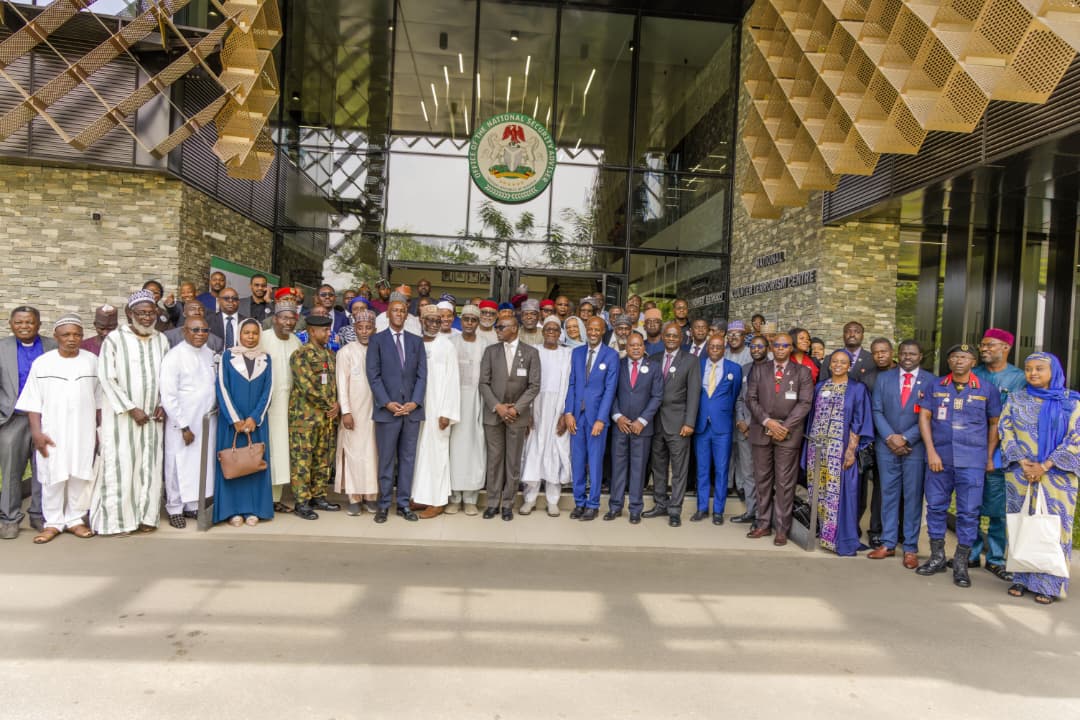
For 2 days in Abuja, Nigeria confronted an uncomfortable fact: the nation just isn’t solely battling insecurity on the bottom; it is usually shedding management of the narratives that encompass it.
The convention hosted by the Nationwide Counter Terrorism Centre, Workplace of the Nationwide Safety Adviser and supported by UKAid funded Strengthening Peace and Resilience in Nigeria (SPRiNG) mission, media professionals, lecturers, safety and army personnel, and civil society actors in addition to spiritual clerics reached a uncommon consensus: how Nigeria defines and describes battle is more and more shaping how that battle evolves.
On the centre of that dialog was the keynote deal with by the Minister of Data and Nationwide Orientation, Mohammed Idris. His message was clear and deliberate.phrases matter, and in fragile environments, they will both stabilise or inflame.
“Definitions will not be impartial,” he warned. When used carelessly, they reinforce stereotypes, deepen divisions, and erode belief between residents and establishments. When used responsibly, they construct understanding and help cooperation. That distinction is now important for Nigeria. Throughout Nigeria’s battle zones, a well-known sample has taken root. Violence erupts, and earlier than details are totally established, narratives are shortly framed alongside ethnic, spiritual, or occupational traces.
The complexity of insecurity whether or not pushed by criminality, land strain, or governance failures is lowered to simplistic labels. These labels, as soon as amplified by headlines, social media, and typically even official statements, harden into public notion.
What the Abuja convention made clear is that this sample is not innocent. It’s the truth is harmful.
Members from the media acknowledged the strain to report shortly in a extremely aggressive data surroundings. However in addition they conceded that velocity has too usually come on the expense of accuracy and context, creating room for hypothesis and distortion.
Navy representatives highlighted the problem of speaking in actual time throughout operations. But, they recognised that untimely or imprecise statements can create confusion, contradict discipline realities, and inadvertently validate unverified claims.
Civil society voices added a important dimension. Communities on the receiving finish of such narratives usually really feel collectively profiled and unfairly focused. This erodes belief, discourages cooperation with safety businesses, and in the end weakens the broader effort to revive peace.
Language as an Operational Instrument
From the safety standpoint, the message was much more direct. The Nationwide Coordinator of the Nationwide Counter Terrorism Centre, Maj. Gen Adamu Garba Laka, underscored that terminology just isn’t merely a communication difficulty it’s an operational one. He drew explicit consideration to the risks of stereotyping and ethnic profiling inside each public discourse and safety operations. When such practices go unchecked, they will undermine intelligence gathering, weaken cooperation between communities and safety businesses, and in the end hinder nationwide and regional safety aims.
In battle environments, the place success usually is dependent upon well timed and credible intelligence, belief is indispensable. Language that alienates communities or suggests collective blame erodes that belief and creates limitations to cooperation.
The Coordinator additional emphasised that platforms just like the Abuja convention are important in fostering extra exact, balanced, {and professional} use of language throughout establishments. In an period the place data spreads immediately, the price of mischaracterisation is larger than ever.
His central level was clear, accountable terminology just isn’t about political correctness it’s about operational effectiveness.
This angle was strengthened by the Angolan Ambassador, Jose Bamokina Zau, warned that the safety challenges are outlined usually determines the options that observe.
When definitions are simplistic or biased, insurance policies danger lacking root causes or worse, aggravating the very issues they search to resolve.
Throughout Africa, he famous, conflicts are too usually lowered to identification narratives that obscure deeper structural drivers resembling socio-economic inequality, governance deficits, environmental pressures, and the disruptive affect of rising applied sciences.
Africa’s variety can’t be lowered to slender labels with out distorting actuality. And when actuality is distorted, coverage turns into ineffective.
He additionally raised a important difficulty, narrative possession. African voices, he argued, should lead in defining African realities. Whereas worldwide partnerships stay beneficial, the framing of native conflicts should replicate lived experiences, not exterior assumptions.
On his half the Rwandan Ambassador to Nigeria, His Excellency Ambassador Moses Rugema mirrored on the 1994 genocide in his nation noting how incitement, hate, ethnic stereotyping later unfold usually strengthened by official channels led to devastating penalties.
He nonetheless famous Rwandan subsequent restoration illustrates how deliberate management, constant coverage of societal dedication form nationwide narrative transfer away from ethnic categorisation and emphasised shared Nationwide identification, fostering reconciliation, cohesion and stability healed the injuries to make Rwanda and worldwide Mannequin of reconciliation.
On the coronary heart of the Abuja discussions was a easy however highly effective fact. Safety just isn’t solely about power; it’s about belief.
When communities really feel labelled or stereotyped, they withdraw. After they withdraw, intelligence dries up. And when intelligence weakens, safety operations undergo. That is the hidden value of careless language.
The Minister cautioned towards attaching safety challenges to ethnic or spiritual identities, noting that such framing dangers profiling total communities for the actions of some. In a rustic as various as Nigeria, this isn’t merely insensitive, it’s strategically damaging. One of the vital vital outcomes of the convention was a shift from blame to shared accountability.
The media shapes public notion. The army shapes official narratives. Civil society displays neighborhood realities. When these actors function with out coordination, contradictions emerge and belief breaks down. However once they align round shared requirements, readability improves and credibility is strengthened.
In right now’s digital surroundings, the place propaganda, disinformation and misinformation spreads quickly, this alignment is not optionally available.
Out of those deliberations emerged a transparent advice: the event of a nationwide battle reporting and communication toolkit.
This isn’t about censorship. It’s about accountability and self-discipline. The toolkit would set up sensible tips for the way conflicts are reported and communicated. It will discourage the informal use of ethnic and spiritual identifiers, besides the place they’re verified and mandatory. It will strengthen verification requirements, making certain that details are clearly distinguished from hypothesis.
It will additionally promote context, encouraging reporting that displays the structural drivers of battle reasonably than decreasing them to identification clashes.
For the army, it could present a framework for clearer, extra constant communication. For the media, it could reinforce skilled requirements. For communities, it could sign equity and inclusion.
As repeatedly emphasised throughout the convention, accountable terminology just isn’t a matter of comfort it’s a requirement for legitimacy, belief, and efficient safety outcomes.
The stakes are clear:
Nigeria has held many conferences. What’s going to decide the significance of this one is what occurs subsequent. The suggestions should transfer past paper. The proposed toolkit have to be developed, adopted, and embedded in each media follow and safety communication.
Establishments just like the Nationwide Orientation Company have a important position to play in reinforcing these values and selling a tradition of accountable communication. At its core, that is about nationwide cohesion.
Nigeria can not afford narratives that deepen division or weaken belief. It can not afford to disregard the hyperlink between language and safety. The Abuja convention has made one factor clear, Nigeria should take management of its narratives or danger these narratives taking management of its conflicts.
In right now’s Nigeria, phrases don’t merely describe actuality. They form it. And except that actuality is formed with care, self-discipline, and accountability, the implications will proceed to unfold not simply in headlines, however in lives.