
Stakeholders Urge FG To Increase Youth Inclusion In Agriculture, Calls For Pressing Reforms

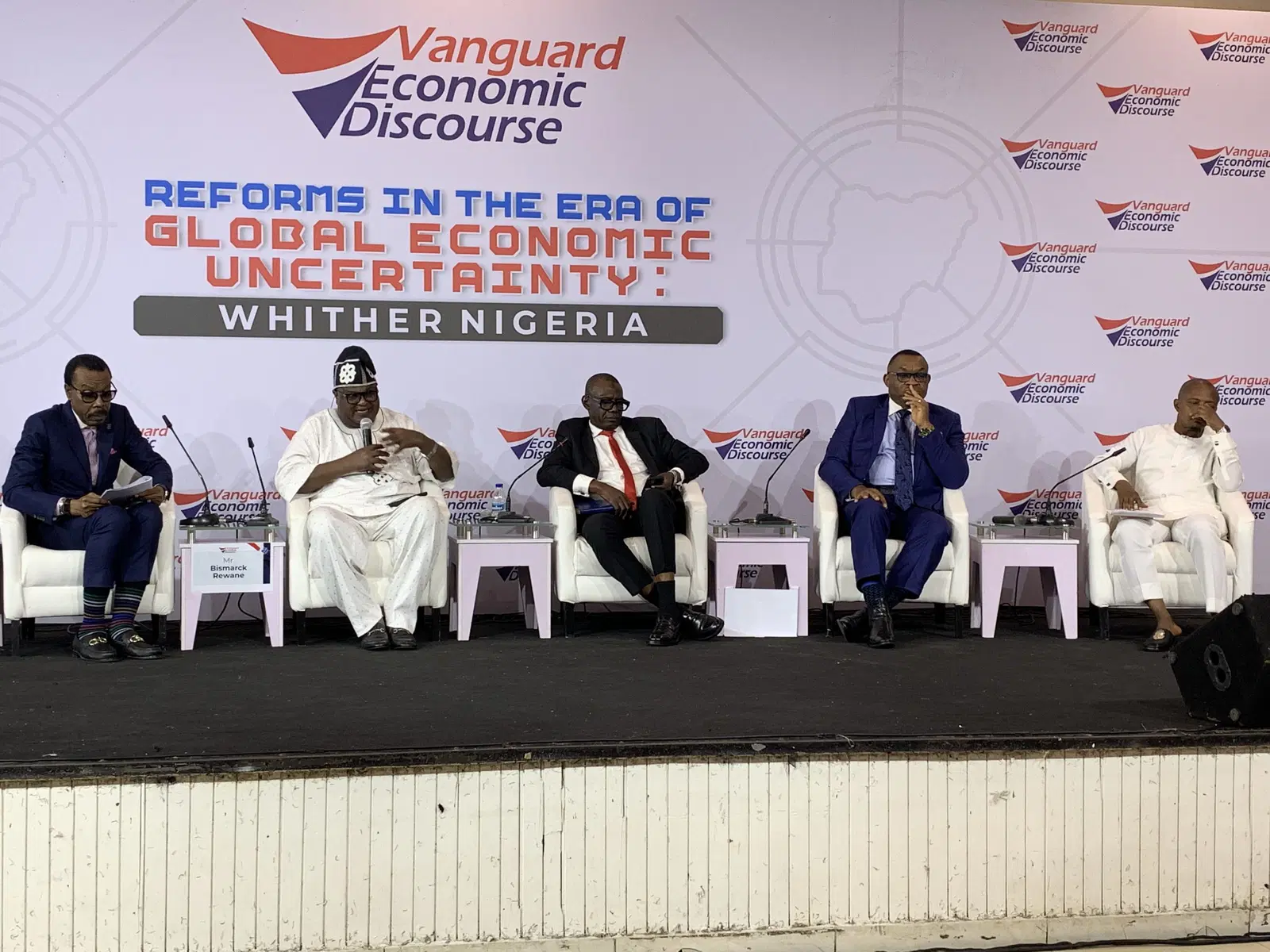
Stakeholders in Nigeria’s agricultural sector have recognized insecurity, low buying energy and weak worth chains as main challenges affecting meals safety, calling for pressing reforms and elevated funding.
The issues have been raised throughout a panel session on the ninth version of the Vanguard {Economic} Discourse held in Lagos on Wednesday.
The President of the All Farmers Affiliation of Nigeria (AFAN), Muhammed Magaji Gattado, mentioned insecurity has considerably decreased farming actions throughout the nation.
“Insecurity has prevented our farmers from going to farms. The speed of production has decreased,” he mentioned, urging the Federal Authorities to undertake proactive measures, together with the institution of a battle prevention committee.
“In my state in Gombe, this has labored and we’ve decreased battle between farmers and herders,” he added.
Representing the Minister of Agriculture and Meals Safety, Abubakar Kyari, an official, Maruf Ajenifuja, mentioned the federal government is implementing initiatives in partnership with states and searching for personal sector participation.
“We’re additionally inviting personal sectors to return in and add to our efforts as a result of funding via the nationwide funds can not cater for the wants of all Nigerians,” he mentioned.
Ajenifuja additionally highlighted the necessity to enhance youth participation in agriculture.
“Within the final ten years, the inclusion of youths has not been encouraging… we need to faucet into them and make them the spine of the sector,” he mentioned.
Founding father of Kebram Farms Ltd, Kabir Ibrahim, argued that meals availability shouldn’t be the core downside, however affordability.
“There’s meals in Nigeria however most individuals can not afford it… buying energy may be very low,” he mentioned.
Sponsored
He referred to as for optimisation throughout the agricultural worth chain and better accountability, stressing that the Federal Authorities alone can not drive the sector.
“Agriculture is a rural vocation. The state ought to dedicate the overall internally generated income to its agricultural sector,” he mentioned.
Additionally talking, Group Managing Director of Xtralarge Farms, Moji Davids, urged a shift from subsistence farming to agribusiness.
“We have to shift consideration from farming as ardour to farming as a enterprise,” she mentioned, warning of a possible international meals disaster.
“I can boldly prophesy that there can be a worldwide meals problem by 2028,” she added.
Davids additionally harassed the necessity for worth addition and secure pricing buildings, noting that inconsistent pricing impacts each farmers and shoppers.
Nation Director of the Worldwide Fund for Agricultural Growth (IFAD), Dede Ekoue, highlighted the significance of worth chain improvement and youth engagement.
“By agriculture, we’ve farming, processing, entry to market and consumption… youths can assist processing, advertising and marketing and distribution,” she mentioned.
Ekoue additionally advocated public-private partnerships to drive agricultural improvement.
“We are able to develop public-private production partnerships to resolve our issues,” she mentioned, including that IFAD is already implementing youth-focused programmes within the Niger Delta.
The panelists collectively emphasised the necessity for coordinated efforts amongst authorities, personal sector and different stakeholders to strengthen Nigeria’s agricultural sector and enhance meals safety.
SPONSORED