

By Ankeli Emmanuel, Sokoto
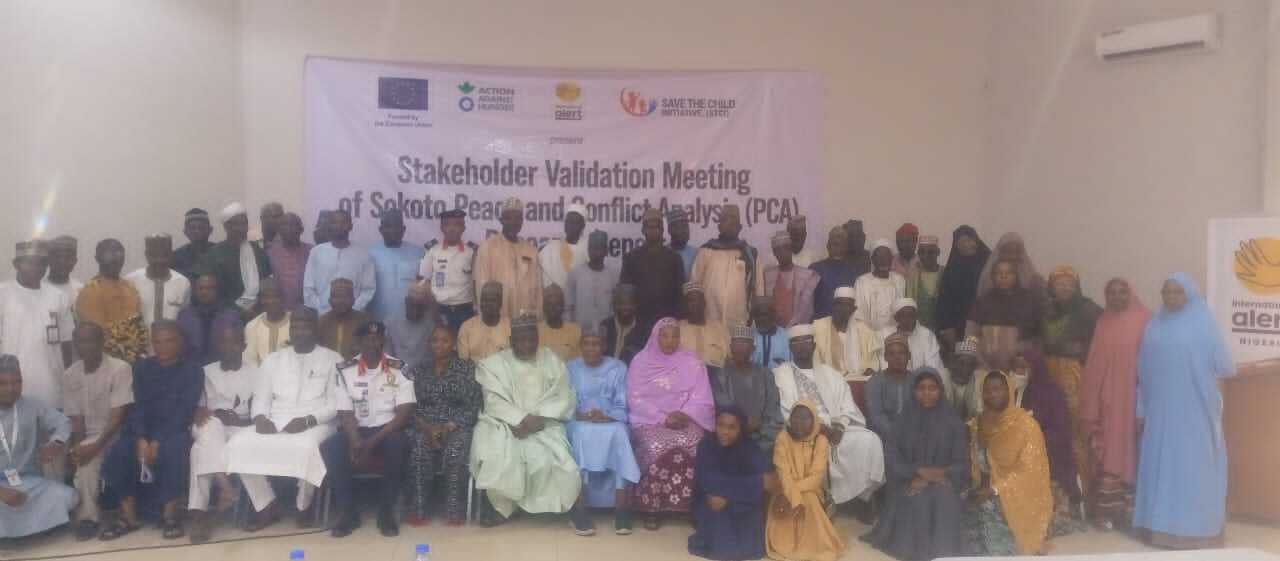
Stakeholders gathered on Tuesday at Dankeni Hotels, Sokoto, to provide critical input towards validating the Peace and Conflict Analysis (PCA) Research Report, conducted by the Crech Research and Development Institute (CRADI).
The research is funded by the European Union and implemented by International Alert, in partnership with Action Against Hunger and the Save The Child Initiative (STCI).
In his welcome remarks, the Programme Manager for Nigeria at International Alert, Mr Sunday Momoh Jimoh, said the validation meeting was designed to ensure stakeholders contribute to a consensus on the report’s findings.
“The entire research can only gain the necessary attention when stakeholders offer their perspectives,” Jimoh said, noting that the subject matter – peace and conflict analysis – is highly sensitive.
Conflict exposure ‘extremely high’
Presenting the overview, process, methodology, and key findings from the draft report, PCA Data Analyst and Field Coordinator Mr Rinji Kwarkas said conflict exposure is extremely high across Sokoto State, with 90.82% of respondents affirming they had experienced or observed conflicts in their communities.
“The report presents the findings of the Peace and Conflict Analysis conducted by CRADI on behalf of International Alert and its consortium partners, to inform the implementation of the Resilience, Engagement and Conflict Prevention for At-Risk Population’s Protection (RECAP) Project in Sokoto State, funded by the European Union,” Kwarkas explained.
Jimoh added that the participatory, context-sensitive, mixed-method research drew primary data from 18 local government areas of Sokoto State. It systematically analysed drivers of conflict, key actors, emerging trends, dynamics, and existing peace factors and opportunities.
Banditry leads conflict drivers
Regarding the characteristics of conflict in Sokoto, the research confirmed that banditry accounts for 74.4% of conflicts, followed by farmer-herder conflict (54.5%), political conflict (54.5%), and resource-based disputes (41.9%). Communal conflict remains comparatively lower, at 20.6%.
Justice and leadership key to peace
Speaking earlier in a goodwill message, the District Head (Sarkin Yakin Gagi), Alhaji Umar Jabi, said relative peace would only be possible when leaders remain upright and refuse to compromise justice.
According to the traditional ruler, no society can be safe when leaders institutionalise corruption, encourage gender inequality, entrench religious intolerance, promote tribalism and regional imbalance, or deny freedom of speech and access to free, quality education.
He also criticised the media for contributing to societal decay, stating that most news outlets have become mouthpieces for the government rather than fulfilling their constitutional responsibility of holding leaders accountable to the public.
Stakeholders in attendance
Stakeholders at the validation meeting included the spokesperson for the Arewa Consultative Forum (ACF), Professor Tukur Baba; members of the Sokoto State House of Assembly; representatives of civil society organisations; security agencies; lawyers; representatives of people with disabilities; youth and women’s groups; and religious leaders.