

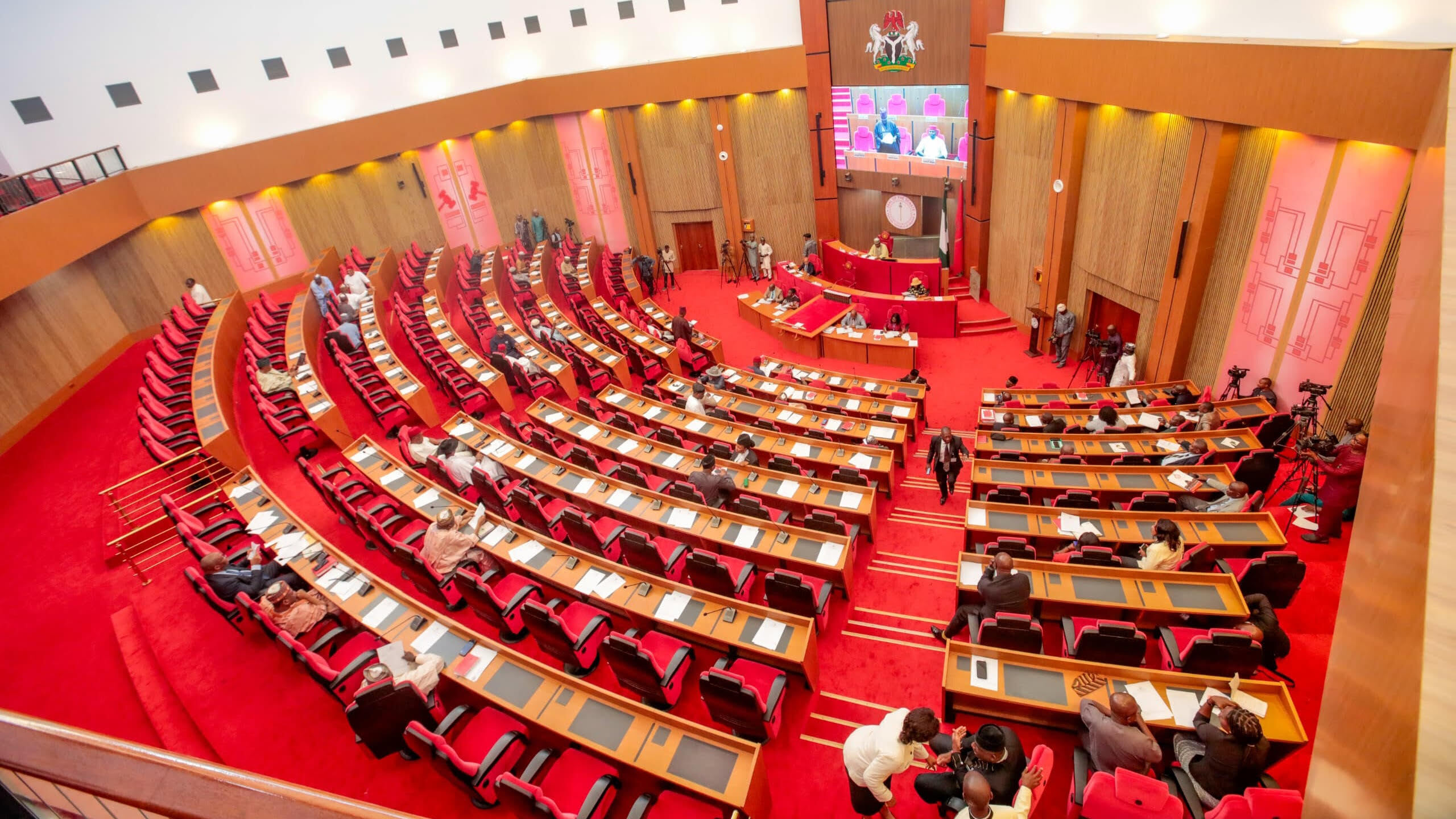
The Senate has initiated legislative action to strengthen the funding framework of the Nigeria Police Force, advancing a bill to repeal and re-enact the Police Trust Fund Act to establish multiple and sustainable financing sources.
The proposed legislation, sponsored by Senate Leader Opeyemi Bamidele, passed its second reading after extensive debate, with lawmakers acknowledging the urgent need to address chronic funding challenges undermining police operations nationwide.
Leading the debate, Bamidele argued that despite significant budgetary allocations over the years, the Nigeria Police continues to suffer from severe funding deficits, weakening its capacity to respond to escalating security threats. The bill seeks to create a more effective legal and institutional framework to support police funding, administration and operational efficiency.
Among its provisions, the bill proposes a diversified funding structure including: one per cent of total revenue accruing to the Federation Account, development levies under relevant tax laws, grants from all tiers of government, as well as donations from international partners and private sector contributions.
According to Bamidele, the reform aims to reduce reliance on annual budgets and ensure predictable funding for modern security equipment, digital surveillance and forensic technologies, rehabilitation of police facilities, and the strengthening of training institutions. He added that the framework would also improve intelligence gathering, emergency response capabilities, and welfare packages for officers.
The Senate Leader noted that while the existing Act was a commendable initiative, experience has exposed gaps in governance, funding sustainability, project execution and accountability—necessitating a comprehensive overhaul rather than piecemeal amendments.
Supporting the bill, Minority Leader Abba Moro stated that the trust fund was originally established to address inadequate police funding, but the situation has worsened, with formations lacking modern equipment to combat crimes such as kidnapping. He lamented that officers are often outmatched by criminals due to insufficient resources.
Deputy President of the Senate, Jubril Barau, backed the proposal as critical to national security and stability, insisting that the police serve the entire federation and require adequate support to function effectively.
However, concerns were raised during the debate. Senator Ibrahim Dankwambo warned that the proposed one per cent deduction from the Federation Account could face legal challenges, noting that similar arrangements had previously been contested by state governments. He also questioned how the funding model would align with ongoing discussions on state policing.
Senator Buhari Abdulfatai argued that beyond funding, the police require improved tools and operational support, pointing out that Nigeria’s police strength—estimated at roughly 300,000 personnel for over 200 million citizens—falls short of global standards.
Following deliberations, Senate President Godswill Akpabio put the bill to a voice vote, with a majority of lawmakers endorsing its progression. He subsequently referred the bill to the Senate Committee on Police Affairs for further legislative work, directing the panel to conduct a public hearing and report back within two weeks.
Akpabio said the hearing would address accountability for previous trust fund allocations, alternative funding options, and the compatibility of the proposed framework with potential state policing structures.