

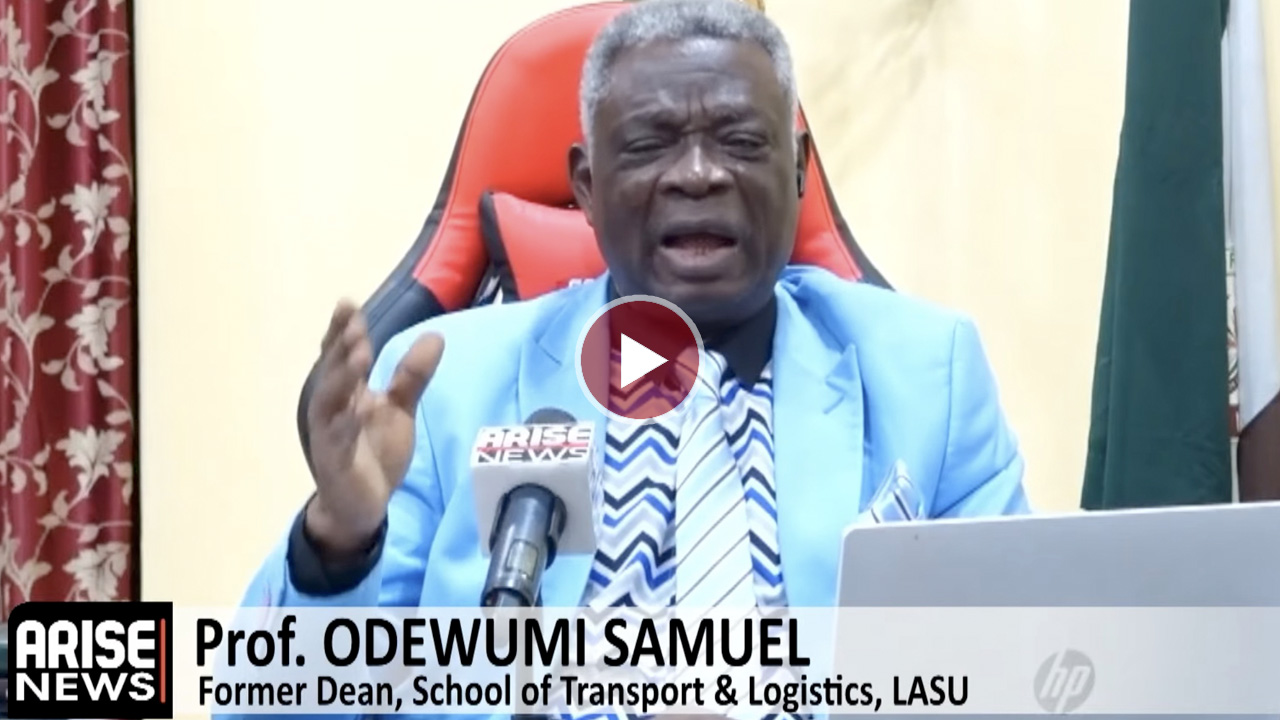
The Performing Vice-Chancellor of the College of Uyo, Prof. Odewumi Samuel, has cautioned that Nigeria’s rising debt profile just isn’t inherently harmful, however may injury the financial system if borrowed funds are mismanaged or diverted from their supposed functions.
Talking in an interview with ARISE NEWS on Friday, Odewumi described borrowing as “a double-edged sword,” stressing that its impression relies upon fully on how successfully the funds are deployed.
“It isn’t whether or not you borrow or not that’s the downside; it’s what you do with it. If you’re environment friendly and use it for the aim supposed, borrowing can foster growth. But when mismanaged, it could injury the financial system,” he stated.
His feedback come amid rising public concern over Nigeria’s plan to safe recent exterior loans, together with $5 billion reportedly from First Abu Dhabi {Bank} and $1 billion from UK Export Finance, to help debt servicing and infrastructure.
Odewumi emphasised that no nation has enough inner assets to fund all its growth wants, making borrowing a essential {economic} device when correctly structured.
“Mortgage, within the fingers of execs, is a superb instrument to deal with underdevelopment. You’ll by no means find the money for to execute all growth tasks directly,” he defined.
Highlighting the function of infrastructure, notably transport and logistics, he added:
“Transportation and logistics are the arteries by means of which socio-economic actions transfer. With out them, {economic} life turns into stagnant.”
He argued that strategic investments in infrastructure can stimulate development, supplied corruption in procurement and execution is eradicated.
On the controversial $1 billion mortgage focused at upgrading Nigeria’s ports, Odewumi defended the transfer, citing the deteriorating state of present services, notably in Lagos.
“The ports have suffered from disjointed incremental growth — patching one downside after one other. What this mortgage seeks to do is restore them comprehensively: quay partitions, jetties, entry roads, and evacuation techniques,” he stated.
He famous that Lagos ports presently deal with about 90 % of Nigeria’s maritime site visitors, making their rehabilitation pressing.
“The one servicing the nation now could be degraded. We should repair what’s working whereas we develop others. You can’t diversify successfully in case your major system is failing,” he added.
Whereas acknowledging calls to increase port infrastructure past Lagos, together with tasks just like the Ibom Deep Sea Port, Odewumi stated diversification should be gradual and strategic.
“Diversification is vital, however Lagos will stay central for a very long time. The aim is complementarity, not competitors. Different ports are arising, however they’ve gestation intervals,” he defined.
He likened port growth timelines to “being pregnant,” noting that new infrastructure takes time earlier than turning into totally operational.
Odewumi warned that infrastructure upgrades alone wouldn’t clear up inefficiencies at Nigerian ports with out addressing systemic corruption and operational bottlenecks.
“You possibly can repair the {hardware}, however the software program — the human aspect — is crucial. Corruption is working like an elephant within the metropolis. Some areas have grow to be virtually ungoverned,” he stated.
He careworn the necessity for institutional reforms alongside bodily upgrades to make sure lasting impression.
Addressing considerations over why port-related loans are tied to Nigeria’s sovereign treasury fairly than port revenues, Odewumi defined that transport infrastructure sometimes delivers oblique {economic} returns.
“Transport is a facilitator. The return on funding doesn’t come immediately from the port however from the broader financial system it permits,” he stated.
He added that anticipating ports to solely repay such loans may result in elevated tariffs and better client costs.
“In the event you push reimbursement fully onto port customers, it’s going to replicate in the price of items. Authorities intervention, even subsidies, is justified in such circumstances,” he famous.
Odewumi concluded by warning that repeated advert hoc interventions in port administration have didn’t ship sustainable outcomes.
“Borrowing for infrastructure is just one a part of the story. With out fixing the system and the folks managing it, we’ll proceed to face the identical challenges,” he stated.
Boluwatife Enome
Times Nigeria