
Over 500,000 Children at Risk: UNICEF Raises Alarm Over Malnutrition Crisis in Northwest Nigeria

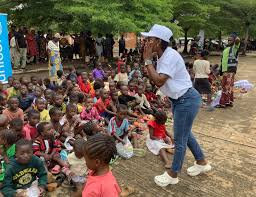
(Child malnutrition.Photo by UNICEF)
Over 500,000 children in the states of Sokoto, Kebbi, and Zamfara are at risk of severe wasting due to a growing malnutrition crisis in northwest Nigeria, according to a warning issued by the United Nations Children’s Fund on Tuesday.
This comes after the results of the 2025 Nutrition SMART Survey were presented during a dissemination workshop in Sokoto, where stakeholders convened to assess the nutrition forecast for the region and map out a response.
According to UNICEF Nutrition Specialist Edward Kotundo, who spoke at the occasion, the results show a concerning prevalence of acute malnutrition among children under five, especially in the states of Sokoto and Kebbi.
He claims that “wasting affects 11% of children in Sokoto and Kebbi, while Zamfara recorded 8.5% placing the first two states in the “high incidence.” category and Zamfara at a “medium level,” but still of serious concern.
Kotundo further disclosed that the survey found a “very high” rate of stunting across all three states, highlighting widespread chronic malnutrition and long-term nutritional deprivation among children.
The results, he said, are in line with the October 2025 Integrated Food Security Phase Classification (IPC) Acute Malnutrition research, which predicted that if immediate interventions are not put in place, more than 500,000 children might become severely wasted.
According to Kotundo, “the data clearly shows that this is not just a health issue but a development emergency that requires coordinated, multisectoral action.”
He praised government organizations and development partners for their cooperation in conducting the survey while speaking on behalf of Michael Juma, the UNICEF Chief of Field Office in Sokoto. He emphasized that reliable data is essential for efficient planning and response.
Additionally, the Sokoto State Primary Healthcare Development Agency’s Director of Medical Services, Muhammad Abubakar Kaura, described Sokoto, Kebbi, and Zamfara as sharing similar cultural and socio-economic realities, underscoring the need for a unified regional approach to tackling malnutrition.
He acknowledged UNICEF’s continued support in strengthening primary healthcare systems, particularly in maternal and child health services.
State nutrition officers, representatives from the ministries of information, budget, and planning, state bureaus of statistics, security agencies, and development partners like Action Against Hunger and Médecins Sans Frontières were among those who attended the session.
In separate messages of goodwill, stakeholders commended UNICEF’s efforts and expressed hope that the survey results will inform more focused nutrition policies and programs.
In order to address the underlying causes of malnutrition, such as food insecurity, poverty, and restricted access to healthcare, they also urged for ongoing collaborations and greater funding.
Participants in the one-day session, which focused on putting data into practice, emphasized the necessity of strengthening community-based responses and scaling up life-saving nutrition programs in order to stop the escalating crisis.