
Opinion: Opinion | Germany And Japan Are Making Their Biggest Military Moves Since WW2. Here's Why

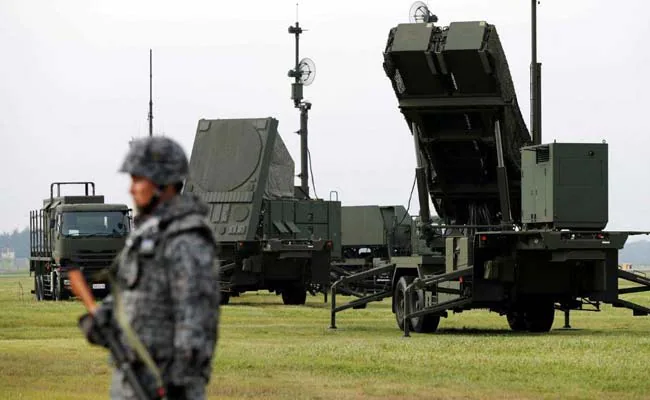
Both Germany and Japan appear to have crossed a strategic Rubicon, moving decisively away from the constraints of post-World War II pacifism toward a more assertive and self-reliant security posture. This is less about choice and more about compulsion, driven by an unforgiving geopolitical environment.
Historically, the rise of Germany and Japan has been central to the making – and unmaking – of the modern global order. Both emerged as formidable industrial powers in the late 19th and early 20th centuries, challenging established hierarchies dominated by older Western empires. Their rapid militarisation and quest for strategic space were key drivers behind the upheavals that culminated in the two World Wars, fundamentally reshaping international politics. The aftermath of World War II, in particular, produced an order that deliberately constrained their military ambitions, embedding them within US-led alliance systems and a rules-based framework designed to prevent a recurrence of revisionist aggression. For much of the post-war era, their economic resurgence without corresponding military assertion became a defining feature of global stability. It is precisely this historical memory, of disruption followed by restraint, that lends such weight to their current strategic reawakening, raising profound questions about how their renewed assertiveness might once again reshape the contours of global order.
. – Scroll to continue
Germany Wants Its Army To Be Strongest
Germany’s so-called Zeitenwende under Olaf Scholz has evolved from rhetorical flourish into substantive policy transformation. Berlin is no longer content with the label of a “reluctant power”. Its 2026 military strategy signals an ambition to emerge as the central pillar of European security. The commitment to make the Bundeswehr the most capable conventional force in Europe by 2039 reflects not only a reassessment of threats emanating from Russia but also a recognition that Europe can no longer outsource its security indefinitely.
What is particularly striking is the institutionalisation of this shift. Germany’s adherence to the 2% NATO benchmark is no longer episodic; it has now been embedded in law, insulating defence spending from the vagaries of domestic politics. Equally important is the qualitative transformation underway. The move away from mere force metrics toward an effects-based doctrine, prioritising precision, speed, and technological integration, suggests a military thinking that is far more aligned with contemporary warfare than its past posture would indicate.
Japan Will Export ‘Lethal Weapons’ Again
Japan, under Sanae Takaichi, presents a parallel yet distinct trajectory. Tokyo’s shift is framed within the language of “proactive peace”, but its substance points to a clear departure from long-held restraints. The recent decision to lift the ban on lethal weapons exports is not just symbolic; it marks Japan’s entry into the global defence marketplace as a serious player. This is complemented by a significant increase in defence spending, breaking decisively with the long-standing 1% ceiling.
More consequential, however, is Japan’s embrace of counterstrike capabilities. This marks a doctrinal shift from passive defence to active deterrence, driven by the intensifying challenges posed by China and North Korea. Initiatives like the Global Combat Air Programme (GCAP) further underscore Tokyo’s intent to embed itself within a network of advanced military-industrial partnerships, even as it recalibrates its legal and normative frameworks to support such ambitions.
The Trump Factor
Taken together, these developments point to a deeper systemic churn in the international order, one that goes well beyond incremental policy adjustments. The era of comfortable security dependencies, particularly among advanced industrial democracies, is steadily receding. For decades, the strategic compact was relatively straightforward: the United States underwrote security, while its allies focused on economic growth and normative influence. That division of labour is now under visible strain, as geopolitical contestation intensifies across multiple theatres. The United States, despite its continuing primacy, is neither able nor inclined to singularly manage the burdens of global order. Domestic constraints, competing priorities, and strategic fatigue have compelled Washington to nudge its allies toward greater self-reliance. What is notable, however, is that this push is no longer being resisted with the same vigour as before. Instead, key actors are recalibrating their strategic outlooks in ways that align with this expectation of burden-sharing.
In this emerging configuration, Germany is seeking to anchor the European security architecture with a degree of seriousness that would have been inconceivable in the immediate post-Cold War decades. Its evolving defence posture signals not just a response to Russian assertiveness but also an acknowledgement that European security must increasingly be managed from within. Similarly, Japan is consolidating its role as a linchpin in the Indo-Pacific, stepping into a space where strategic ambiguity is no longer tenable.
A Post-War Shift
What is equally significant is the gradual normalisation of militarisation in political cultures that were once deeply sceptical of it. In both Germany and Japan, post-war identities were built around restraint, multilateralism, and a preference for non-military instruments of statecraft. The current shift, therefore, is not merely institutional but civilisational in character. When such states begin to rearm at scale, it reflects a broader erosion of faith in the sufficiency of diplomacy unbacked by credible force.
This trend is already generating ripple effects across regions, particularly in East Asia. Japan’s evolving security posture is being closely watched, and sharply critiqued, by China, which views these changes through the prism of historical memory and contemporary rivalry. The result is a classic security dilemma: measures intended as defensive reassurance by one actor are interpreted as offensive escalation by another, thereby reinforcing cycles of mistrust and military competition.
At a deeper level, these shifts point toward the gradual unwinding of the US-led quasi-unipolar moment into a more diffused and contested order. Power is becoming more distributed, but also more fragmented, with regional actors assuming greater responsibility for their immediate strategic environments. In this evolving landscape, Germany and Japan are not merely adapting to structural change-they are actively shaping the contours of a new, more multipolar security architecture where responsibility and risk are far more widely shared.
(Harsh V Pant is Vice President, Observer Research Foundation, New Delhi.)
Disclaimer: These are the personal opinions of the author