

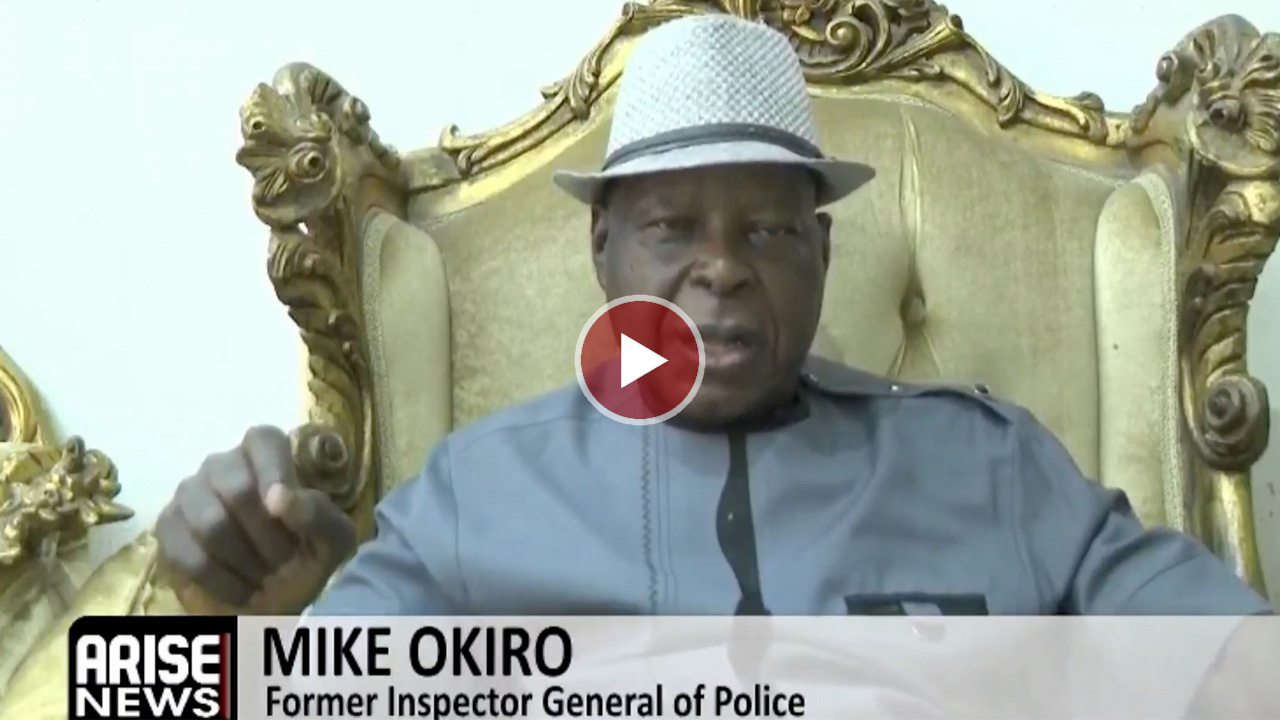
Former Inspector-Normal of Police, Mike Okiro, has endorsed the proposed institution of state police in Nigeria, arguing that decentralising the power would considerably enhance safety, however warned that the proposed five-year implementation timeline is simply too lengthy.
Talking in an interview with ARISE NEWS on Monday, Okiro mentioned deploying as much as 60 per cent of police personnel to the states is each sensible and mandatory, given Nigeria’s huge geographical, cultural, and linguistic range.
He mentioned, “That’s correct as a result of Nigeria is so huge—geographically, ethnically, and linguistically. That is what ought to have been the case all alongside.”
Okiro attributed longstanding inefficiencies in policing to insufficient federal funding and overstretch, noting that decentralisation would permit state governments to higher equip and handle officers.
In keeping with him, “The federal authorities has not been capable of equip the police correctly, perhaps due to finances constraints and competing priorities. If decentralisation is available in and states take duty for a part of the police, it will likely be higher.”
He added that state-controlled policing would encourage wholesome competitors amongst governors and enhance operational effectiveness.
“There shall be competitors among the many states—every attempting to do higher by way of policing. Governors are already doing properly in different areas, and this can mirror in policing too,” he mentioned.
Highlighting the significance of native information, Okiro argued that officers deployed inside their cultural and linguistic environments would carry out higher.
“Due to tradition, faith, and language, it’s simpler for officers to function inside their states. A policeman from Rivers State will carry out higher there than somebody unfamiliar with the terrain, language, or atmosphere,” he defined.
Whereas supporting state police, Okiro emphasised the necessity for sturdy coordination between federal and state forces, noting that sure crimes would nonetheless require federal oversight.
“We now have one Nigeria, so there should be synergy between the Inspector-Normal, the federal authorities, and the states. Some crimes can’t be dealt with by states alone; they require federal involvement,” he mentioned.
On funding, Okiro backed proposals to allocate a portion of federal income on to policing, arguing that states will need to have {financial} autonomy to deal with their distinctive safety challenges.
“The division of budgetary allocations is correct. States ought to handle their policing wants independently as a result of they perceive their native challenges higher. He who wears the sneakers is aware of the place it pinches,” he famous.
He additionally referenced worldwide fashions, significantly Canada, the place provincial police programs function with shared duties between federal and subnational governments.
“In Canada, provinces have their police forces, with personnel and gear tailor-made to their wants, whereas the federal authorities supplies funding. Nigeria can undertake an identical strategy,” he mentioned.
On the proposed five-year implementation interval, Okiro expressed sturdy reservations, urging a shorter and extra decisive timeline.
“5 years is simply too lengthy. Whereas safety reforms can’t occur in a single day, the timeframe must be shorter and extra reasonable,” he acknowledged.
He added that when enshrined within the structure, the implementation of state police wouldn’t rely on any single administration.
“If it turns into constitutional, it is going to outlive any authorities. Implementation can proceed no matter who’s in energy,”he mentioned.
Okiro additional prompt that state governors ought to play a job in appointing Commissioners of Police, much like their involvement in federal appointments.
“Governors ought to have enter in appointing Commissioners of Police of their states, simply as they advocate candidates for federal positions,” he mentioned.
On institutional reforms, he questioned the need of making a brand new Nationwide Police Requirements Committee when the Police Service Fee already has outlined oversight duties.
“The Police Service Fee already has clear capabilities, together with appointments, promotions, and self-discipline. We should guarantee roles will not be duplicated however correctly aligned,” he added.
Okiro concluded that decentralised policing, backed by correct funding, authorized readability, and coordination, stays a viable path to addressing Nigeria’s safety challenges.
“State police will enhance effectivity, accountability, and response to native safety points—if correctly carried out,” he mentioned.
Boluwatife Enome
Times Nigeria