

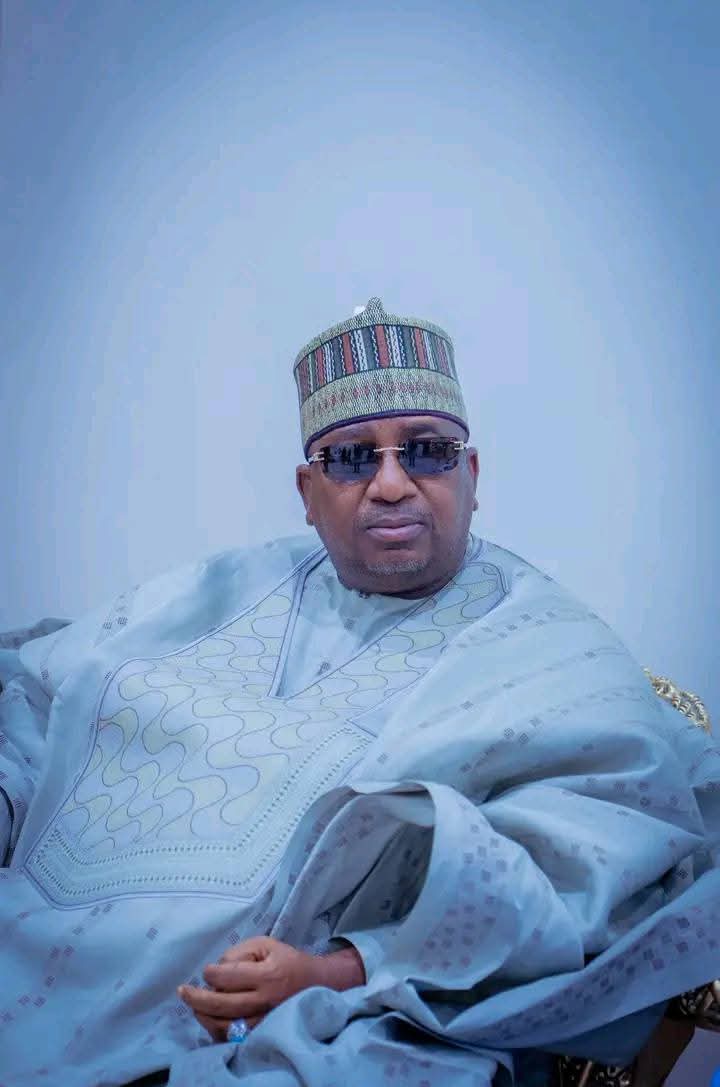

When Nasir Idris (Kauran Gwandu) assumed management of Kebbi state in 2023, he inherited a healthcare sector bursting on the seams. Dilapidated well being services lined communities throughout the state, reinforcing Kebbi’s unenviable place among the many worst-performing states by way of maternal and youngster mortality indices in Nigeria.
As a person who appeared to grasp that management begins with an sincere prognosis, he didn’t draw back from laying naked the grim actuality. In an interview with newsmen, he revealed that there have been hospitals the place sufferers needed to lie on the ground as a result of absence of fundamental hospital beds. Taking a look at what has been achieved to this point, that admission was certainly a sign of intent. He made it clear that he wouldn’t go away the sector in the identical state he met it.
Gov. Nasir made the decision figuring out full nicely, that the challenges confronting healthcare in Kebbi state had been neither remoted nor simplistic; they had been layered. The primary, which confronts anybody who approaches a well being facility, was the seen decay in infrastructure. The second, not all the time seen, was the persistent scarcity of educated personnel. Then there was the long-standing situation of poor welfare for well being employees, which had over time contributed to low morale and, in some instances, migration of pros out of the state. Addressing such a posh net of issues required a coordinated, holistic strategy. That’s exactly the trail Governor Idris selected.
A take a look at hospitals carrying new seems throughout Kebbi at present exhibits that there’s a renewed sense of urgency within the well being sector, renovation and upgrading of services are being pursued with a pace that out there sources can maintain. In Argungu, the seat of the traditional and UNESCO-recognised Argungu Fishing Pageant, residents not too long ago expressed appreciation following the great overhaul of the Common Hospital Argungu. The ability, as soon as emblematic of neglect, has been remodeled into a contemporary healthcare centre outfitted with improved diagnostic and remedy infrastructure.
This intervention in Argungu just isn’t an remoted case. In Birnin Kebbi, the Sir Yahaya Memorial Hospital, one of many state’s main referral centres, has undergone vital renovation and re-equipping. Equally, upgrades have been prolonged to services such because the Common Hospital Yauri and the Common Hospital Zuru, alongside a number of major healthcare centres scattered throughout native authorities areas.
The logic behind the deliberate concentrate on major healthcare centres is each strategic and pragmatic. Whereas tertiary establishments typically dominate coverage conversations, healthcare supply in Nigeria basically begins on the grassroots. Main healthcare centres stay the primary level of contact for almost all of residents, notably these in rural communities. Subsequently, the federal government is, by strengthening these services, not solely easing strain on secondary and tertiary hospitals but in addition guaranteeing that preventable situations are addressed early earlier than they escalate into life-threatening issues.
Expectedly, this layered funding is starting to yield outcomes. Improved infrastructure has enhanced affected person confidence in public well being establishments, whereas entry to care in beforehand underserved areas has incrementally improved. Although the journey is way from full, the route is unmistakable.
But, even probably the most outfitted services can’t operate with out expert personnel. This actuality seems to have formed the administration’s subsequent line of intervention. Gov. Idris was confronted with a option to both proceed to rely largely on well being employees educated exterior the state or construct an inside pipeline able to sustaining the sector in the long run. He selected the latter.
One of many flagship initiatives beneath this imaginative and prescient is the institution of the Kauran Gwandu Faculty of Nursing and Midwifery Sciences in Ambursa. The establishment is designed to increase the coaching capability for nurses and midwives, immediately addressing the persistent scarcity of healthcare professionals, notably in rural communities. By investing in native coaching, the state just isn’t solely producing manpower but in addition growing the chance of retention, as regionally educated professionals are sometimes extra inclined to serve inside their communities.
Nevertheless, coaching alone just isn’t sufficient. Retention is equally important, and retention is essentially pushed by welfare. Recognising this, the Idris administration has launched a lot of welfare enchancment measures aimed toward motivating healthcare employees and stabilising the workforce.
Amongst these measures is the implementation of improved remuneration buildings for well being personnel, together with the cost of hazard allowances and changes aligned with nationwide well being wage benchmarks. The administration has additionally prioritised the immediate cost of salaries and allowances, a difficulty that has traditionally plagued the sector in lots of states. As well as, recruitment drives have been initiated to bridge manpower gaps, thereby lowering the workload burden on present employees.
There have additionally been focused incentives designed to encourage rural postings, the place shortages are sometimes most acute. By making rural service extra engaging, the federal government is making an attempt to right the uneven distribution of well being employees between city and rural areas. Coaching alternatives {and professional} improvement programmes have additional complemented these efforts, giving well being employees a way of profession development somewhat than stagnation.
Taken collectively, these welfare interventions replicate an understanding that healthcare reform isn’t just about buildings and tools however concerning the individuals who do the work like docs, nurses, midwives, and help employees who type the spine of the system.
What’s rising in Kebbi state, due to this fact, just isn’t a collection of disconnected initiatives however a coordinated try at systemic reform. Infrastructure is being rebuilt as rapidly as human capability is being developed. Equally, welfare points are being addressed. That understanding is that every of those parts reinforces the opposite.
After all, it will be untimely to declare whole victory. The healthcare challenges in Kebbi state, like in lots of components of Nigeria, are deeply rooted and would require sustained dedication over time. Points resembling inhabitants development, funding constraints, and evolving well being threats will proceed to check the resilience of the system. Nevertheless, what could be stated with some confidence is that the muse for a practical healthcare system is being intentionally laid.
In a rustic the place coverage continuity is usually sacrificed on the altar of political transition, the early steps taken by Gov. Nasir Idris in Kebbi’s well being sector stand out for his or her readability of goal and structural focus. The emphasis just isn’t merely on quick optics however on constructing a system that may endure. If sustained, these interventions have the potential to considerably alter the healthcare panorama of Kebbi state, lowering maternal and youngster mortality, enhancing life expectancy, and restoring public belief in authorities well being establishments.
And, there’s no higher means of guaranteeing that these positive aspects are sustained, than by re-electing Gov. Idris for an additional time period within the forthcoming elections. With out operating the danger of sounding partisan, I consider it’s best to pitch tent with the one who’s laying a stable basis than to get sucked into the empty rhetoric of these promising to construct castles within the air.
Whereas, for now, the indicators are modest but encouraging, it should even be famous that healthcare is a sector the place incremental progress naturally interprets into saved lives. Then, think about that these modest achievements are worn out by an administration much less inclined about healthcare supply. That is the place the individuals of Kebbi have a job to play. They will be certain that these incremental modifications proceed. And that is by standing with Gov. Idris within the 2027 election. He has proven clearly that he understands what’s required, not solely within the well being sector however throughout each sphere of governance. But, solely continuity can assure that his plan of impression can attain full maturity.