

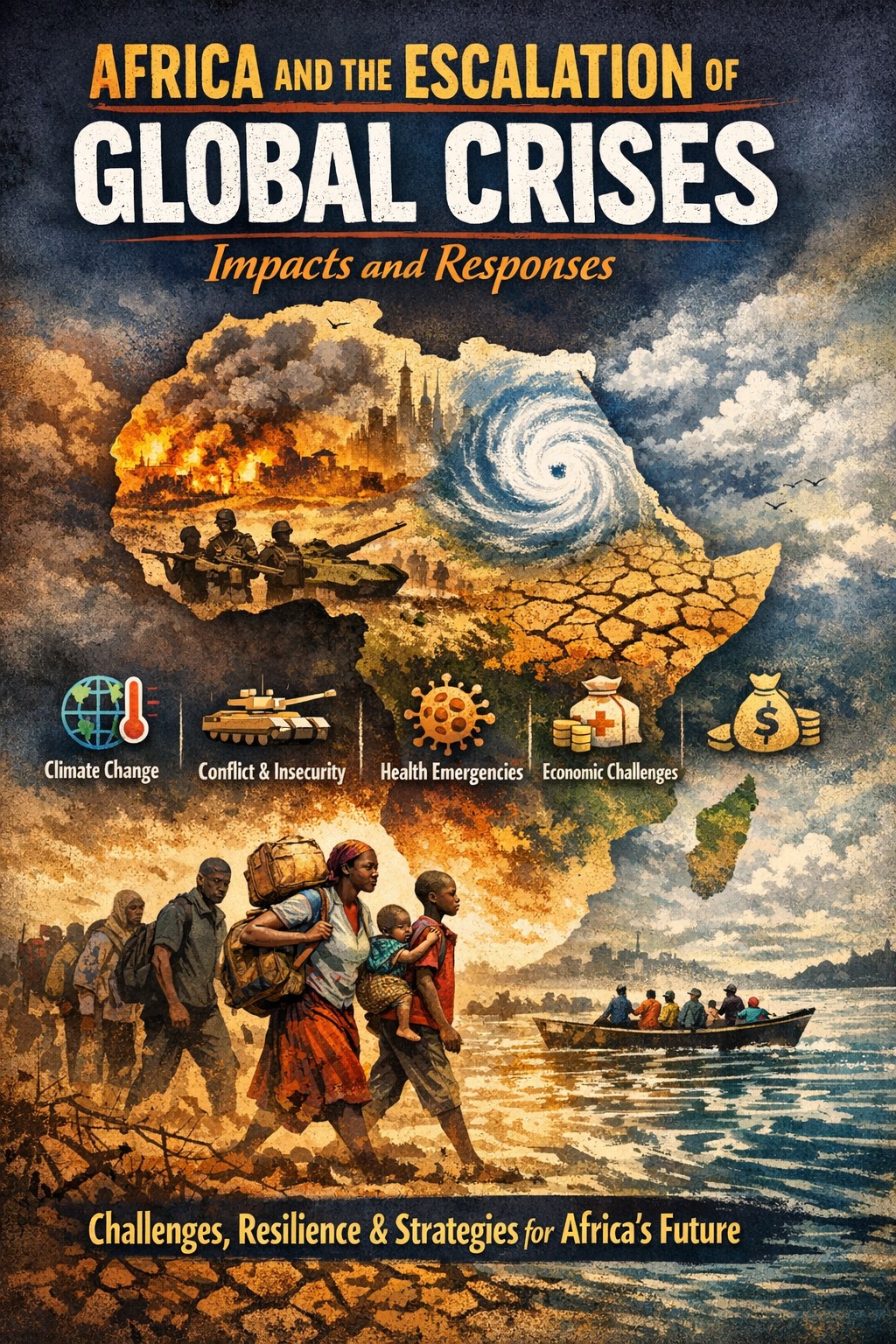

A coverage discussion board, in Abuja, has referred to as for stronger measures to guard the continent’s economies from the fallout of worldwide crises.
The decision was made at a discussion board organised by TrustAfrica in partnership with the Centre for Democracy and Growth (CDD), West Africa, Thursday in Abuja, as a part of the TrustAfrica Board Assembly, with discussions centred on the theme: ‘Africa and the Escalation of World Crises: Impacts and Responses.’
Blueprint stories that the discussion board introduced collectively consultants, policymakers, and growth practitioners to look at methods for strengthening Africa’s resilience towards world shocks and to discover the position of initiatives such because the African Continental Free Commerce Treaty in boosting intra-African commerce.
Talking on the occasion, a former United Nations Below-Secretary-Common and Govt Secretary of the UN {Economic} Fee for Africa, Abdoulie Janneh, mentioned world conflicts symbolize a breakdown of worldwide order and have direct penalties for African nations that aren’t events to such wars.
“Warfare is a destruction of guidelines and laws. It’s unhappy, however we are able to get up one morning and resolve that we’ll not destroy one other nation,” he mentioned, urging a shift in world fascinated by battle.
The UN ex-official confused that Africa continues to bear {economic} penalties of distant conflicts, significantly via inflation and shortages, whereas additionally questioning the effectiveness of worldwide establishments in addressing such crises.
“The financial system impacts us via meals costs and gas costs. The occasions are onerous on us. These are severe implications as a result of we shouldn’t have entry to commodities,” Janneh mentioned, including that Africa should strengthen inside commerce programs to cut back dependence on exterior markets.
He suggested that, “Africa should commerce inside itself and prioritise the activation of the Free Commerce Treaty. The African Union should put in place mechanisms to commerce amongst ourselves, which might help minimise the affect of the struggle.”
On the {economic} entrance, an economist and former Minister of Economic system and Finance of Tunisia, Hakim Hammouda, warned that world crises are more likely to worsen current structural challenges throughout African economies, significantly in key sectors equivalent to agriculture and trade.
“This disaster will speed up difficulties, as trade and agriculture might be affected. There might be {economic} stagnation,” he said.
The ex-minister referred to as for innovation and stronger engagement from each governments and civil society in designing new coverage responses.
Hammouda defined, “We have to apply stress in designing approaches and growing new concepts. It’s time for innovation and new methods of growth to answer this disaster.”
On his half, the Director of CDD, West Africa, Garuba Dauda, pointed to current examples of how world conflicts have already disrupted African economies, citing the affect of the Ukraine struggle on grain provides to nations like Ghana, Kenya and Nigeria.
“Even when the struggle ends within the Center East, issues is not going to stay the identical. The struggle in Ukraine has affected three African nations; Ghana, Kenya and Nigeria, particularly when it comes to grains.
“We have to return to buying and selling inside ourselves. We’d like frameworks to do that via the Africa Free Commerce Treaty,” he mentioned.
Additionally talking, a senior fellow on the CDD West Africa, Professor Jibrin Ibrahim, highlighted the broader social and political implications of worldwide instability, noting that African societies are more and more uncovered to exterior pressures.
“Wars have a huge effect on our society. We’re in a troublesome worldwide scenario,” he mentioned, calling for “coordinated methods and collective motion” to mitigate these impacts.
Different contributors targeted on governance, unity, and the position of residents in responding to crises.
In the identical vein, Marwa El Darly of the American College in Cairo confused the significance of collective motion and civic engagement in addressing insecurity throughout the continent.
El Darly famous, “We’re at the moment dwelling in a world of insecurity. The answer to the problems in Africa is unity, and unity is energy. Illusions exist in imperialism and colonialism.”
She added, “We should rise up for the values we imagine in. Civil society organisations have roles in governance.”
Sibongile Mkhabela of the Barloworld Empowerment Basis drew consideration to the necessity for long-term social change, significantly via youth empowerment and schooling.
“We have to transfer away from points related to the previous, equivalent to colonisation. We have to strengthen regional solidarity,” she mentioned.
The discussion board concluded with a consensus amongst members on the necessity to speed up the implementation of the “African Free Commerce Treaty and strengthen intra-African collaboration” as sensible steps to cushion the continent from the rising affect of worldwide crises.
TrustAfrica, based in 2006, is an impartial philanthropic organisation rooted in Africa. The organisation believes that Africans should set the agenda for addressing the continent’s most urgent challenges.
The discussion board comes at a time when African economies are grappling with the ripple results of a number of world crises, together with the struggle in Ukraine, conflicts within the Center East, and broader geopolitical tensions amongst main world powers.
These developments have disrupted world provide chains, pushed up the price of power and meals, and uncovered the vulnerability of import-dependent economies throughout the continent.
Many African nations, nonetheless recovering from the {economic} shocks of the COVID-19 pandemic, now face rising inflation, forex pressures, and slowing development.