

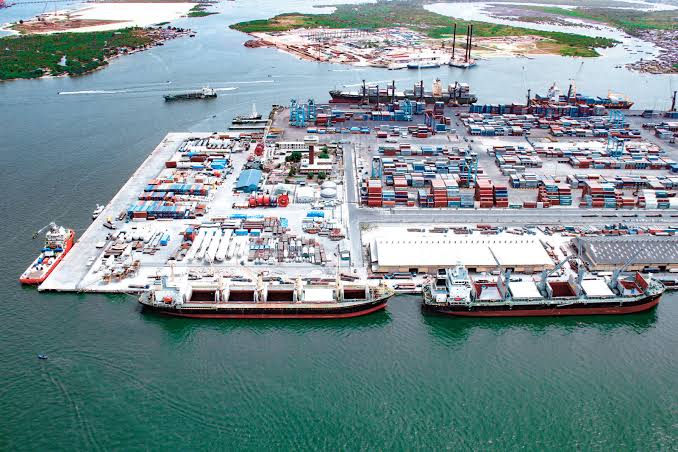
Apapa Port was constructed within the Twenties by the British colonial masters apparently to facilitate the transport of agricultural uncooked supplies to Britain. Tin Can Island Port was constructed by the federal authorities throughout Olusegun Obasanjo’s reign as army dictator. It was commissioned in 1977.
The 2 ports are Nigeria’s foremost maritime hubs. They deal with 70 per cent of the nation’s imports and exports.
Apapa Port musters a 55-hectare container terminal, 1,005-meter quay size with draught of 12.5 meters. The port is plagued with perennial congestion because the cargo clearing processes are dealt with by cumbersome paperwork.
Tin Can Island Port is provided with 12 berths and a 260-meter vessel restrict. The port can deal with 10-16 vessels concurrently.
The port battles debilitating congestion that inhibits Nigeria’s imports and exports processing and plagues the enterprise group with excessive price of doing companies because of clumsy cargo clearing processes.
Nigeria has ports in Port Harcourt, Rivers state, Calabar, Cross River state and Warri in Delta state. The ports are very idle on account of calamitous infrastructure deficits. Whereas Port Harcourt Port is comparatively busy, the one in Calabar is idle as a result of it’s bedeviled by catastrophically shallow channels and berthing amenities. No fashionable giant ship can use the power in Calabar Port due to these encumbrances. The Port in Warri is constrained by related infrastructure deficits.
Calabar Port was dredged in 1977 by Harbour Works of the Netherlands however the channels stay disastrously shallow for any fashionable giant ship to enterprise into.
The federal authorities is sufficiently disturbed by the constraints within the nation’s maritime sector. Final month throughout President Bola Ahmed Tinubu’s state go to to the UK of Nice Britain, he signed a Memorandum of Understanding (MoU) with the British authorities for a £746 million export financing and rehabilitation of Apapa and Tin Can Ports. Many years of neglect have significantly restrained the skills of the 2 ports to deal with the nation’s imports and exports with the velocity required by fashionable ports.
Guide processing of cargo clearing and poor infrastructure on the two ports result in heavy site visitors and lengthy delays in cargo clearing and consequently excessive demurrage charges imposed on importers.
The contract just lately signed by President Tinubu with the federal government of Britain will result in the digitisation of the 2 main ports. That course of will finish the perennial congestion engendered by the cumbersome course of of products clearing on the two main ports. The enterprise group will heave sighs of aid if the step taken by the federal authorities is pursued to a logical conclusion.
The massive demurrage incurred by importers due to clumsy items clearing processes and infrastructure deficit on the two main ports will vanish immediately with the completion of the rehabilitation course of.
Items will likely be cleared promptly because the cumbersome paper works are confined to the arcade of historical past. The 2 ports will likely be geared up with extra berthing amenities. Their berths will likely be dredged from 12.5 meters to 16 meters, making it doable for big fashionable ships to berth.
The deal to improve amenities on the two ports will lower container dwell time and improve Nigeria’s maritime competitiveness by digitisation and capability growth. Rehabilitation of Apapa and Tin Can Island Ports will improve effectivity, enhance logistics and place Nigeria as a aggressive hub for regional and worldwide commerce.
It should additional improve Nigeria’s capability to compete below the African Continental Free Commerce Space (AfCFTA). Moreover, it’ll enhance Nigeria’s non-oil income, appeal to international investments and create hundreds of jobs.
The challenge will likely be executed over a interval of 48 months on the finish of which endemic congestion on the two ports will not be recorded. The multi-million kilos challenge will profit each Nigeria and Britain. There are robust indications that Britain’s metal business which is at the moment present process severe {economic} melancholy will profit from the challenge as it’ll generate hundreds of jobs from the £22 million that will likely be spent on metal merchandise for the rehabilitation of the 2 ports.
Nigeria’s financial system will profit immensely from the challenge. It should create hundreds of jobs at a time when the financial system is encumbered by alarming double digit unemployment.
Above all, it’ll empower the 2 ports to deal with the huge development in non-oil exports recorded just lately within the financial system. The Nigerian Export Promotion Council (NEPC) has taken steps to encourage Nigerian exporters so as to add worth to their export merchandise. The council has additionally opened markets for Nigerian export items. These main steps have led to huge improve in Nigeria’s non-oil exports which the 2 ports can not deal with with their archaic cargo clearing amenities and disastrous infrastructure deficits. With the rehabilitation of the 2 ports they are going to be in place to deal with the rise in non-oil exports and scale back the price of doing enterprise.
The deliberate rehabilitation of the 2 ports will, above all, improve international direct investments into Nigeria’s financial system. Overseas direct buyers who have been deterred by the perennial congestion within the two ports curiously watched the scene of the signing of the contract for the rehabilitation of the ports. They are going to be very prepared to spend money on Nigeria when the ports are rehabilitated and empowered to clear items promptly.
Nigeria has drawn the international direct buyers into its financial system in latest occasions with the rise within the nation’s whole international reserves. The reserve has risen from the seemingly jinxed $33 billion threshold it maintained for many years and has now crossed the $50 billion mark.
On the earlier place, the Central {Bank} of Nigeria (CBN) couldn’t promptly allocate international alternate to international direct buyers for the export of the proceeds of their funding to their dwelling international locations.
Now with the reserves standing above $50 billion, CBN can promptly allocate international alternate for export of funding proceeds.
Nigeria is not tying down international buyers earnings. That’s the reason the buyers are trouping in. Extra will come when port congestion vanishes with rehabilitation of the 2 ports.