

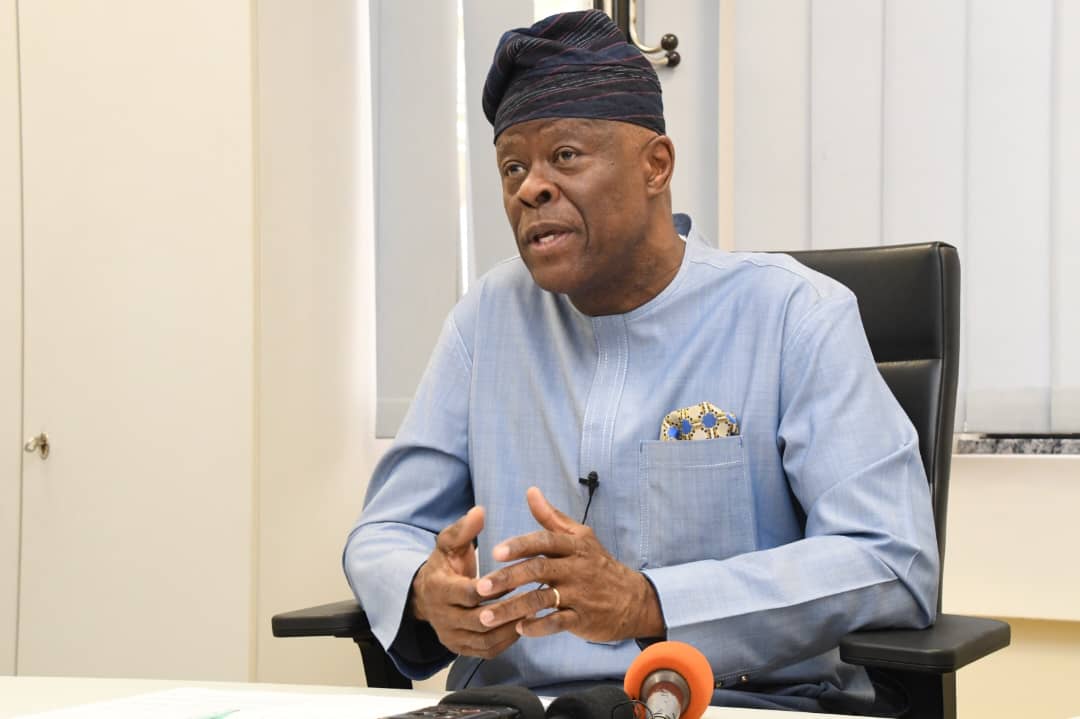
Talking in his capability as Chair of the G-24 Group of Nations, at a press briefing of the group on the sidelines of the World {Bank}/IMF Spring Conferences, Edun stated policymakers should strike a fragile steadiness between inflation management and {economic} development.
“There’s a vital balancing function right here, the place if rates of interest are raised too early and too excessive in an effort to curtail doubtlessly rising inflation, that can also do injury to the transformations that are going down in economies,” he stated.
“Alternatively, if rates of interest are usually not moved in time, that can also do injury. So the central banks have a balancing act in serving to to steer economies safely by means of this present power disaster and geopolitical tensions.”
On Nigeria’s reform trajectory, Edun cautioned in opposition to coverage reversals, stressing that hard-earned features should be preserved. “Having made a lot progress, it is necessary that we don’t have a return to generalized subsidies, a form of relapse into insurance policies that haven’t confirmed profitable previously,” he stated.
He argued as an alternative for focused interventions, noting that “the main focus actually needs to be on serving to the poorest and most weak to deal with the elevated pricing regime that they may face,” quite than abandoning reforms.
Offering context on the worldwide power shock, Edun defined that even oil-producing international locations are usually not insulated. “It’s additionally not a one-way road, even an oil producing nation does have transmission of the upper prices, which feeds by means of from fuel costs to fertilizer to meals costs and so forth.”
On the rising debt burden, Edun delivered a stark warning: “The elevated borrowing prices and the debt servicing burden that growing international locations are paying is weighing closely on their means to rework their economies and to realize sustainable growth.”
Sponsored
He revealed that the scenario has worsened considerably. “Once you have a look at debt servicing, the outflow from debt servicing due to elevated curiosity prices outweigh what got here in,” he stated, underscoring that growing nations are successfully experiencing internet useful resource outflows.
Backing this place, Director of the G-24 Secretariat, Iyabo Masha, famous that regardless of reforms by international establishments, gaps stay. She stated, “even with that, the hole stays, and so there’s nonetheless far more they will do, particularly on the debt facet, on how they create down the price of borrowing.”
Edun known as on international establishments to step up help. “Multilateral growth establishments ought to step up right now with help, liquid help, in addition to thought management to assist international locations navigate this era,” he stated, including that concessional financing and liquidity instruments are urgently wanted.
He, nonetheless, pressured that long-term resilience should come from inside. “There must be a reliance on home useful resource mobilization, complete tax regimes that not solely enhance useful resource mobilization however on the identical time cut back the price to the bottom earners,” he acknowledged.
Different officers on the briefing included First Vice-Chair, Akhtar Javed, representing Pakistan’s Finance Minister, and Second Vice-Chair, Bernardo Acosta, representing Ecuador’s Minister of Financial system and Finance.
On international commerce and structural shifts, Edun pointed to rising fragmentation. “What we’ve got seen lately is a retreat from a world buying and selling system that’s rules-based and orderly. That has pushed growing international locations to concentrate on home production and extra on regional integration.”
Edun warned that, “It’s one of these self-help, self-reliance and home useful resource mobilization that international locations must look to because the sustainable foundation for transformation,” whilst he reiterated that “the sturdy” nations and establishments should do extra to help weak economies.