

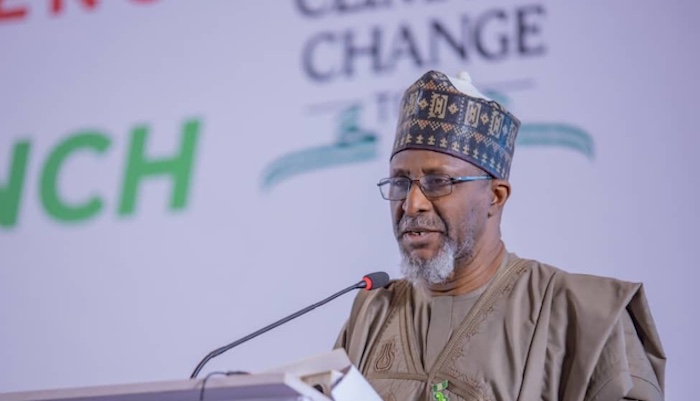
Minister of Setting, Balarabe Abbas Lawal, has urged the media to take a extra proactive position in addressing Nigeria’s environmental challenges, stressing that accountable reporting and sustained public consciousness are important to defending the nation’s ecological future.
Talking at a media engagement workshop in Abuja, Lawal described journalists and digital communicators as vital companions in tackling local weather change, environmental degradation and biodiversity loss, noting that the media stays central to shaping public understanding at a time of accelerating ecological stress.
He highlighted key environmental threats dealing with Nigeria, together with desertification within the North, flooding and erosion within the South-East and South-South, oil air pollution within the Niger Delta, deforestation and the broader influence of local weather change on livelihoods and meals safety.
Lawal mentioned that beneath President Bola Ahmed Tinubu’s Renewed Hope Agenda, the Federal Ministry of Setting has intensified efforts to advertise sustainability alongside {economic} progress, citing initiatives such because the Agro-Climatic Resilience in Semi-Arid Landscapes (ACReSAL) mission and the Nationwide Company for the Nice Inexperienced Wall, which have restored over 1.14 million hectares of degraded land and supported the planting of greater than 1.5 million timber nationwide.
The minister, nevertheless, famous that environmental points are sometimes underreported regardless of their direct hyperlink to agriculture, public well being and {economic} stability, urging journalists to undertake data-driven and solutions-oriented approaches that spotlight each challenges and improvements.
He additionally inspired media practitioners to leverage digital platforms to have interaction younger Nigerians and amplify local weather motion, whereas reaffirming the ministry’s dedication to offering entry to environmental information and assets to help efficient reporting.
Lawal confused that the position of the media extends past reporting, noting that the narratives formed immediately can affect behaviour, information coverage choices and mobilise collective motion towards a cleaner, extra resilient Nigeria.
Times Nigeria