
Edun Guidelines Out Subsidy Return Regardless of Oil Income Positive aspects, Warns Of Rising World Pressures

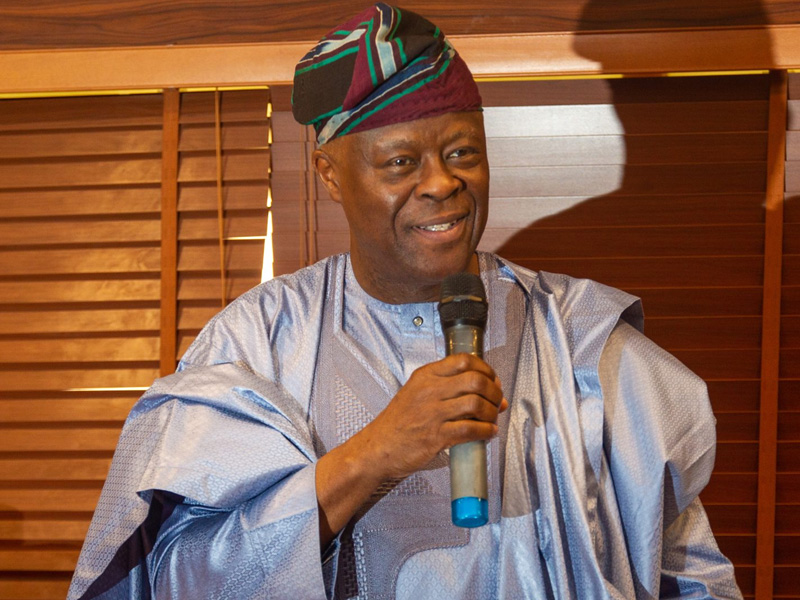
Nigeria’s Minister of Finance and Coordinating Minister of the Financial system, Wale Edun, on Tuesday warned towards coverage reversals akin to a return to broad-based subsidies, whilst international {economic} pressures intensify.
Edun, who spoke in his capability because the Chair of the Intergovernmental Group of 24 (G24), mentioned throughout a G24 media briefing, on the ongoing IMF/World {Bank} spring conferences in Washington DC, mentioned rising economies should resist the temptation to unwind current reform positive aspects, stressing that fiscal responses ought to stay focused and short-term relatively than distortive.
He additionally identified that central banks face a fragile balancing act in navigating inflation dangers with out undermining fragile recoveries throughout creating economies.
Edun mentioned: “For the oil-producing nations, the Ecuador and Nigeria, you might say, there may be the transmission of upper oil costs into greater revenues. All of that’s significant for the governments presently, which is completely completely different from oil-importing nations, who clearly face escalated prices.
“However I have to say that it’s additionally not a one-way road, within the sense that even an oil-producing nation does have transmission of the upper prices, which feeds by means of from gasoline costs to fertilizer to meals costs and so forth. So it’s on either side that this present power disaster is affecting nations.
“I feel that the concept is to have the ability to have the resilience to climate the present shocks, and which means the buffers which have been constructed have for use. However I feel that it’s a query of utilizing focused and short-term reduction, notably for the poor and essentially the most susceptible, to assist them by means of the cost-of-living spike, versus rolling again the transformations which economies have taken.
“As you recognize, within the case of Nigeria, that moved very quickly below the President who got here in in 2023 to take away subsidies on petroleum merchandise, and to additionally take away subsidies that have been associated to the overseas change markets. And so these positive aspects, which, if we take a look at them, have been transferring at tempo and have now been negatively affected by an exterior shock, which had nothing to do with Nigeria or creating nations as an entire.
“Having made a lot progress, it is crucial that we don’t have a return to generalised subsidies, a form of relapse into insurance policies that haven’t confirmed profitable prior to now.”
Commenting on financial coverage within the G24 nations, he mentioned: “Central banks and financial coverage presently, the overriding message is that there’s a essential balancing function right here, the place if rates of interest are raised too early and too excessive in an effort to curtail or see doubtlessly rising inflation, that can also do harm to the transformation that are happening in economies, whereas, then again, if rates of interest are usually not moved on time, that can also do harm by way of permitting too lax financial coverage or too lax growth of the economic system on the unsuitable time.”
He famous that the transmission of world shocks differs throughout economies, notably between oil exporters and import-dependent nations, however careworn that even oil-producing nations are usually not insulated from inflationary spillovers.
Talking to the G24 nations’ financing circumstances, Edun warned that rising debt service obligations and shrinking exterior inflows have been tightening fiscal area throughout creating economies.
He added: “We’re in a interval the place creating nations, rising and creating economies, are going through a internet outflow. While you take a look at debt service and diminished internet official improvement help (ODA), and even overseas direct funding (FDI), the debt service in 2024 of creating nations at about $163 billion outweighed abroad improvement help of about $47 billion, plus even overseas direct funding. While you add these inflows, the outflow from debt servicing due to elevated curiosity prices outweighs what got here in.
“I feel that while seeking to see what could be finished by the developed world, multilateral improvement establishments also needs to step up presently with help, liquid help, in addition to thought management to assist nations navigate this era.
“A very powerful lesson is that there needs to be a reliance on home useful resource mobilisation inside these nations, the general public sector, as in Nigeria, complete tax regimes that not solely enhance useful resource mobilisation however on the identical time scale back the fee to the bottom earners, each individually and as governments. It’s such a self-help, self-reliance and home useful resource mobilisation, together with the non-public sector, that nations must look to, each by means of this shock and going ahead, because the sustainable foundation for transformation of economies that must develop and take their folks out of poverty.”
He known as on multilateral establishments to strengthen concessional financing and supply extra liquidity help, whereas urging better reliance on home useful resource mobilisation.
“The elevated borrowing prices and the debt servicing burden that creating nations are paying is weighing closely on their means to remodel their economies and to realize sustainable improvement,” he added.
Additionally talking, Director of the G24 Secretariat, Iyabo Masha, mentioned regardless of reforms by multilateral establishments, financing gaps stay vital, notably on debt prices and entry to reasonably priced funding.
She added: “The multilateral organisations have provide you with a variety of insurance policies on what they will do in a different way. The World {Bank} is supporting a number of the improvement initiatives on power and the IMF is making an attempt to assessment its applications and insurance policies to make them extra appropriate to the wants of creating nations. However even with that, the hole stays, and so there’s nonetheless far more they will do, particularly on the debt facet, on how they bring about down the price of borrowing.
“For instance, on this desk, we have now G24 member nations which can be on the highest finish of those who pay the very best curiosity to the IMF, however the discount in surcharge charges. In order that’s one space during which the IMF can help creating nations, and there are additionally a variety of discussions happening with the World {Bank} on methods during which they will additional help creating nations.”
Eromosele Abiodun and Nume Ekeghe
Times Nigeria