
Edun: Nigeria’s Expanded Worldwide Tax Cooperation To Get better Revenues Misplaced To Illicit Flows

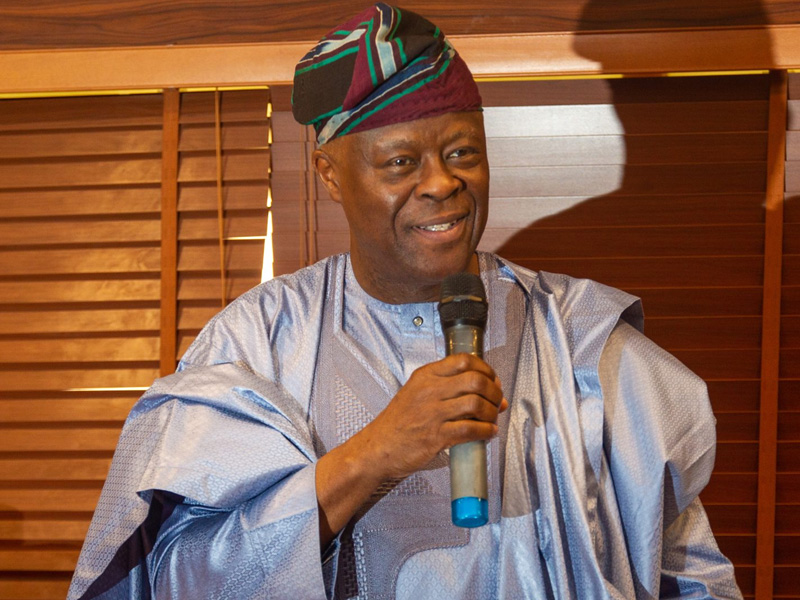
Minister of Finance and Coordinating Minister of the Financial system, Mr. Wale Edun, Tuesday in Abuja declared that Nigeria had expanded worldwide tax cooperation, deploying data alternate mechanisms to determine and recuperate revenues misplaced by way of illicit {financial} practices. Edun disclosed this in a keynote handle on the opening ceremony of Committee on Tax and Illicit {Financial} Flows of the Specialised Technical Committee on Finance, Financial Affairs, {Economic} Planning and Integration (STC – FMAEPI).
His handle dwelt on “The Crucial of African Fiscal Home Reform in a New World Order.”
Edun recalled that since Could 2023, underneath the management of President Bola Tinubu, Nigeria had applied complete tax reforms aimed toward simplifying the tax system, broadening the tax base, lowering the burden on susceptible populations, and bettering compliance.
He mentioned the reforms got here into impact in January 2026, including that the administration has additionally strengthened transparency and accountability within the administration of pure useful resource revenues.
Edun said, “The president signed Govt Order 9 that stipulates that every one oil and gasoline revenues are remitted into constitutionally designated accounts previous to disbursement.
“As well as, the removing of gasoline subsidies and the unification of the alternate fee have considerably improved fiscal transparency, decreased distortions, and strengthened investor confidence.
“To additional improve commerce effectivity and cut back leakages, Nigeria just lately launched a Nationwide Single Window system—an vital step in tackling trade-based illicit {financial} flows.”
The minister mentioned, “These reforms are already yielding outcomes. Nigeria has recorded notable enhancements in income efficiency, significantly in non-oil revenues, alongside stronger fiscal buffers and elevated investor confidence.
“We’ve got additionally expanded worldwide tax cooperation, deploying data alternate mechanisms to determine and recuperate revenues misplaced by way of illicit {financial} practices.”
Whereas the reforms mirrored Nigeria’s expertise, Edun said that additionally they underscored a broader level that sensible, country-led reforms had been important to advancing Africa’s collective fiscal resilience.
He listed precedence areas for African fiscal reform, stating that the trail ahead requires readability of priorities.
In line with him, Africa’s fiscal reform agenda should concentrate on, first, broadening the tax base by way of improved compliance and decreased leakages, strengthening public {financial} administration to make sure transparency, accountability, and worth for cash.
Others had been selling home financial savings and {financial} inclusion to mobiliselocal
capital, growing strong capital markets to assist funding and innovation, in addition to intensifying efforts to fight illicit {financial} flows by way of stronger enforcement and cross-border cooperation.
In his handle, Govt Chairman, Nigeria Income Service (NRS), Dr. Zacch Adedeji, mentioned Illicit {Financial} Flows (IFFs) remained probably the most urgent threats to Africa’s {economic} progress. Adedeji known as for a united entrance to sort out the menace.
He lamented that yearly, billions of {dollars} that ought to assist growth throughout the continent had been diverted by way of unlawful {financial} transfers, commerce mispricing, tax evasion, and opaque company buildings.
Adedeji mentioned the large outflows represented misplaced alternatives, hospitals, faculties, infrastructure, and investments in the way forward for Africans.
He mentioned the size of the issue was highlighted within the influential Excessive LevelPanel on Illicit {Financial} Flows from Africa Report, which introduced world consideration to the magnitude {of financial} leakages affecting African economies.
Nevertheless, he mentioned Nigeria had proactively responded in varied methods to the Mbeki Panel Report findings and different coverage suggestions aimed toward tackling IFFs.
He mentioned addressing the challenges required coordinated motion throughout a number of fronts throughout the nationwide programs and at continental ranges.
Adedeji said, “Illicit {financial} flows being inherently transnational in nature exploit variations between jurisdictions and weaknesses in worldwide regulatory programs.
“This is the reason continental cooperation by way of platforms similar to this Subcommittee isn’t solely helpful however indispensable.
“The longer term prosperity of Africa will rely considerably on our skill to construct sturdy fiscal establishments, shield our {financial} assets, and mobilised the revenues required to finance growth from inside our personal economies.”
The NRS chairman mentioned the assembly mirrored the “seriousness with which Africa is confronting probably the most vital challenges of our time, easy methods to strengthen our fiscal programs, safeguard our assets, and mobilise the home revenues required to finance Africa’s growth”.
Adedeji defined, “This assembly takes place at a time when growth financing hole is widening for a lot of African nations.
“Governments throughout the continent should finance infrastructure, strengthen social safety, assist industrialisation, and handle local weather vulnerabilities whereas on the similar time grappling with substantial losses {of financial} assets to by way of illicit {financial} flows, tax evasion, aggressive tax avoidance and the like.
“The central function of our gathering, illicit {financial} flows stays probably the most urgent threats to Africa’s {economic} progress. Yearly, billions of {dollars} that ought to assist growth throughout our continent are diverted by way of unlawful {financial} transfers, commerce mispricing, tax evasion, and opaque company buildings.
“Fortunately, inside these challenges lies the chance to rethink the foundations of our growth financing. Income authorities, stand on the frontline of this chance. Tax administrations play a central function in constructing succesful states.”
He mentioned, “Efficient tax programs don’t solely generate income, they strengthen governance, deepen the connection between residents and the state, and supply the assets required for sustainable growth.
“When income programs are clear, environment friendly, and honest, they reinforce public confidence in authorities establishments.
“This is the reason strengthening income administration has develop into a central part of fiscal reform throughout Africa.”
He added, “Throughout the continent, income authorities are modernising their programs, increasing the tax base, bettering compliance frameworks, and adopting digital options to reinforce effectivity and transparency. Nigeria has embraced this reform agenda with dedication.”
The NRS chairman mentioned, “By the continuing modernisation of the Nigeria Income Service, we’re pursuing a complete transformation of our tax administration programs to make sure that they’re extra responsive, technology-driven, and able to supporting nationwide growth goals.
“These reforms are a part of Nigeria’s broader {economic} technique aimed toward strengthening home useful resource mobilisation, bettering fiscal transparency, and making a extra predictable surroundings for funding and {economic} progress.”
Ndubuisi Francis and James Emejo
Times Nigeria