
As Hormuz Traffic Stalls, U.S. Pitches New Coalition to Get Ships Moving Again

WASHINGTON—Just weeks after President Trump declared the Strait of Hormuz “COMPLETELY OPEN AND READY FOR BUSINESS” only to see ship traffic stall, the administration is now asking other countries to join a new international coalition that would enable ships to navigate the waterway.

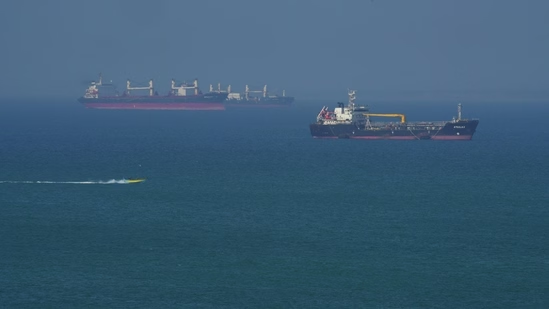
Vessels in the Strait of Hormuz.

The effort, called the “Maritime Freedom Construct,” was spelled out in an internal State Department cable sent to U.S. embassies on Tuesday that called on U.S. diplomats to press foreign governments into signing up. The U.S.-led coalition would share information, coordinate diplomatically and enforce sanctions, according to the cable.

It is the latest example of the Trump administration trying to restart the flow of commercial traffic through the strait, despite Iran’s efforts to lay mines and attack tankers that transit the chokepoint without Tehran’s approval.

The strait’s future has become a key sticking point in stalled peace talks between the U.S. and Iran, leaving the vital chokepoint in limbo as anxiety climbs over spiking global energy prices. While Iran is targeting vessels that don’t pay transit fees to leave the strait, the U.S. Navy has imposed a sweeping blockade on all ships going to or coming from Iranian ports.

The Trump administration’s request for support shows the U.S. wants other nations involved in the current and potentially future management of the Strait of Hormuz.

“Your participation will strengthen our collective ability to restore freedom of navigation and protect the global economy,” the cable reads. “Collective action is essential to demonstrate unified resolve and impose meaningful costs on Iranian obstruction of transit through the Strait.”

Trump has railed against allies, particularly North Atlantic Treaty Organization members, for not assisting the U.S. and Israel militarily during the war against Iran. While the Maritime Freedom Construct isn’t a military coalition, the cable instructs U.S. officials to ask foreign counterparts whether they would like to be a “diplomatic and/or military partner.”

The MFC would be a joint effort between the State Department and U.S. Central Command, according to the cable. State “will serve as the diplomatic operations hub” while Centcom “will provide real-time maritime domain awareness” for commercial shipping and coordinate information sharing between partner militaries.

When asked about the proposal, a senior administration official confirmed the idea as one of the many diplomatic and policy resources at the president’s disposal.

Trump on Monday told aides to prepare for an extended blockade that could remain in place until Iran caves to his nuclear demands, The Wall Street Journal previously reported. On Wednesday, Trump told reporters, “the blockade is genius, OK, the blockade has been 100% foolproof.”

Sitting in the Oval Office, Trump said he was willing to maintain the blockade and continue the war “unless they agree that there will be no nuclear weapon.”

The push to create a U.S.-led coalition appears to run counter to some of Trump’s previous demands that allies, particularly in Europe, take the lead in militarily prying open the strait.

In late March, Trump told aides he was open to ending the war on Iran without resolving freedom of navigation issues in the strait, leaving the problem for European allies to solve.

“Build up some delayed courage, go to the Strait, and just TAKE IT,” he wrote March 31 on Truth Social. “You’ll have to start learning how to fight for yourself, the U.S.A. won’t be there to help you anymore, just like you weren’t there for us.”

“Go get your own oil!” he pressed allies, singling out the U.K.

Trump later said Europeans didn’t need to take part in any operations in the Strait of Hormuz, accusing them of waiting for the conflict to end before getting involved. NATO is a “paper tiger,” Trump said earlier this month. “NATO didn’t help us.”

Senior European officials have countered that Trump never gave them notice that he was launching the war, making it difficult to provide support from the outset. Other European leaders have publicly condemned Trump’s decision to go to war as a strategic mistake.

European countries have held multiple meetings to design a strategy that would allow ships to navigate the waterway once the Iran war ends. The U.K. and France chaired a meeting of over 50 countries on the issue, though U.S. officials accuse Europeans of moving too slowly and bureaucratically during a fast-moving crisis affecting the global economy.

“The MFC would be complementary to other security maritime task forces, including the maritime planning effort the U.K. and France are leading,” the cable reads.

Write to Robbie Gramer at robbie.gramer@wsj.com and Alexander Ward at alex.ward@wsj.com

🔴 LIVE: Watch Video Here ➜