

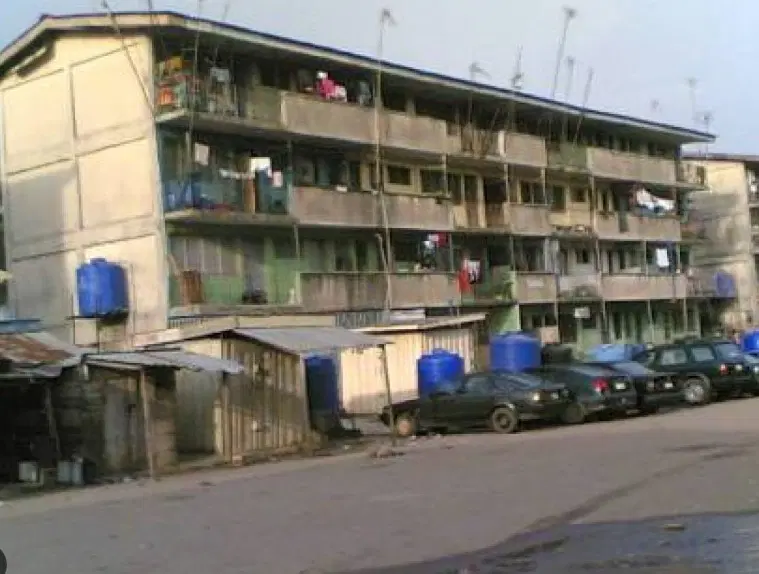
LAGOS — Throughout many cities and cities in Nigeria, a quiet however alarming housing disaster is taking maintain
— one that’s forcing households to relocate, downgrade their residing situations, or sink into debt.
It isn’t triggered by battle or catastrophe, however by a relentless and principally arbitrary rise in home rents, worsened by the excesses of some landlords and property brokers. For a lot of residents, the query is now not the place to stay, however whether or not they can afford to stay in any respect.
This quickly unfolding lodging disaster is already a tragic actuality in main cities akin to Lagos, Abuja, Port Harcourt, Kaduna, Kano and, certainly, most state capitals throughout the nation.
Sadly, that is occurring at a time Nigeria’s housing disaster has assumed alarming proportions, with consultants warning that the nation should construct about 550,000 housing models yearly for the following 10 years to bridge a deficit now estimated at 14.9 million models.
The determine underscores the dimensions of a disaster considered one of many worst globally, as hundreds of thousands of Nigerians stay with out entry to respectable and inexpensive shelter. Current information from the World {Bank} and the {Bank} of Business counsel that precise funding required to shut this hole might exceed N59 trillion, a staggering sum that highlights the disconnect between present budgetary provisions and the truth on floor.
Confronted by meals inflation that’s now hitting the roof, and transportation prices which have continued to rise resulting from sharp will increase within the costs of petroleum merchandise, the situation of most metropolis dwellers has taken a pointy flip that might inexorably finish in a climax of catastrophe.
Certainly many residents are at present being haunted by the traumatising nightmares of being rendered homeless as a result of they can’t pay lodging rents which have instantly been priced past their attain.
Lagos: How arbitrary lease hikes are rendering many homeless
Within the bustling metropolis of Lagos, the dream of city residing is more and more turning right into a nightmare for hundreds of thousands. Nigeria’s business hub has develop into an area the place lease spikes relentlessly, landlords and property brokers thrive on arbitrary charges, and strange residents battle to maintain a roof over their heads.
Narrating his expertise, a pissed off tenant mentioned: “By the point the discover arrived, it was not even written on paper. It got here as an off-the-cuff WhatsApp message from the agent, despatched on a Tuesday morning, and skim thus: ‘Your lease is now N 1.8 million. For those who can’t pay, vacate earlier than month finish’.”
For 4 years, Adaobi had lived in a two-bedroom flat in Egbeda along with her husband and two kids. The lease had been N750,000 after they moved in. It was later elevated to N950,000. Now, with out renovation, with out negotiation, and with out formal discover, it had practically doubled.
“I learn it 3 times,” she mentioned, sitting on a plastic chair within the compound she could quickly go away. “I assumed possibly it was a mistake. How do you leap from N950,000 to N1.8 million similar to that?”
To make issues worse, most landlords have devised varied exploitative means to tear off their tenants. Based on Jude Iwu, who mentioned he was talking from expertise, a rising apply in Lagos is for legal professionals and caretakers to insist on a one-year fixed-term tenancy. “It’s a strategic transfer to bypass prolonged eviction processes required for periodic tenancies.
He additional defined that it had develop into an avenue to cost a full Bargain charge yearly of renewal which is legally questionable. What this entails is that each tenancy renewal is handled as a brand-new contract requiring a contemporary 10 per cent authorized charge.
Some tenants try to get round this improvement by requesting a renewal possibility that ensures the contract has a clause stating that the tenant has the best of first refusal to resume on the finish of the Bargain, supplied all obligations had been met.
This underlines the unhappy story of Madam Maureen Okafor, a tenant within the Ajao Property a part of Lagos.
Priced out of house: A Lagos tenant’s story of survival in an oppressive rental market
In 2022, the promise of a modest, secure life in Ajao Property, Lagos, felt inside attain. With N1.4 million, I secured an condominium, nothing extravagant, only a place to name house in a metropolis that by no means slows down. However beneath the floor of that quiet neighbourhood, a distinct actuality was unfolding, one that may quickly flip consolation into fixed uncertainty.
It didn’t take lengthy to note a troubling sample. Tenants had been being requested to go away with alarming frequency. Notices to give up got here like uninvited company — sudden, disruptive and sometimes unexplained. Inside simply three years of residing there, I watched 5 neighbours pack and go away. Every departure carried the identical silent message: nobody was really settled. Then, it grew to become private.
My lease was elevated. No negotiation, no consideration — only a sharp hike that felt disconnected from actuality. After I raised issues, hoping for dialogue or perhaps a measure of empathy, I used to be handed my very own discover to give up. In that second, it grew to become clear: on this system, tenants are expendable.
What makes the scenario much more horrible is the situation of the property itself. The constructing, now over 50 years previous, has not been remodeled in any significant approach to justify the staggering enhance. But immediately, that very same condominium now goes for N4.5 million, greater than threefold leap in simply three years.
Compelled into the market once more, I encountered a fair harsher fact. The housing sector, as soon as regarded as merely aggressive, revealed layers of exploitation. Brokers, pushed by commissions, had been actively pushing landlords to inflate rents. They usually achieve this with unsettling enthusiasm, typically detached to the pressure on strange Nigerians attempting to safe shelter.
In some circumstances, the burden grew to become nearly absurd. Landlords started demanding two years’ lease upfront. Think about a three-bedroom condominium listed at N4 million per 12 months, with a requirement to pay N8 million without delay — on high of a ten per cent company charge and Bargain fees. For a lot of, this isn’t simply tough; it’s not possible.
The implications are already taking form. A quiet exodus is underway, as tenants, together with younger professionals, households, and small enterprise homeowners, are being priced out of town. The very individuals who preserve Lagos alive are being pushed additional away from it.
If this pattern continues unchecked, an odd irony could outline the longer term: landlords sitting alone of their costly, empty buildings, whereas the workforce migrates inward, trying to find affordability over proximity.
This isn’t only a housing situation. It’s a human story — of displacement, of resilience, and of a rising divide between those that personal and those that merely want a spot to stay.
For Ekene Nwonye, a 29-year-old graphic designer residing in Yaba, lease now determines all the things else in life. “I don’t plan anymore,” he mentioned. “My wage is N220,000. My lease is N900,000. Do the maths. I eat late. I save nothing.”
He not too long ago moved right into a shared condominium with three different adults, a brief answer that feels everlasting. “We’re all educated individuals,” he mentioned quietly. “However we stay like college students as a result of lease gained’t allow us to breathe.”
In Ajegunle, a retired civil servant, 67-year-old Mr. Samuel Okere, is getting ready to go away Lagos fully. His landlord elevated lease from N400,000 to N900,000. “I can not combat,” he mentioned softly. “My pension can not combat.”
Brokers as gatekeepers of concern
On the centre of the disaster are property brokers, a lot of whom function with little regulation. Tenants accuse them of inflating rents, creating synthetic competitors, and turning desperation into revenue.
“Brokers now inform you, ‘For those who don’t take it, 5 persons are ready,’” mentioned Bose, a single mom in Ikorodu. “Typically they’re mendacity. However concern makes you agree.”
A number of tenants interviewed described a sample: brokers encourage landlords to boost rents sharply, citing inflation, trade charges, or “market worth,” then add a number of charges — Bargain, warning, fee — generally totalling 20 to 30 per cent of annual lease.
An agent in Surulere, who spoke anonymously, admitted the strain. “All people needs to money out,” he mentioned. “Landlords complain of prices, brokers need fee, and tenants are caught within the center.”
Landlords’ justifications, tenants’ actuality
Landlords argue that rising constructing materials prices, taxes, and upkeep justify increased rents. Cement costs, for instance, have climbed considerably in recent times, and a few landlords say they’re merely adjusting to {economic} realities, even for homes constructed over 50 years in the past.
However tenants counter that lots of the hikes are unconnected to enhancements or repairs. “They didn’t repair the leaking roof,” mentioned Bose. “They didn’t change something. However they modified the lease.”
In some circumstances, tenants who try to barter are met with ultimatums relatively than dialogue. The message is evident: pay or pack.
The legislation that exists solely on paper
Lagos has tenancy legal guidelines designed to guard tenants, together with provisions on discover durations and arbitrary will increase. In apply, enforcement is weak, and plenty of tenants are unaware of their rights.
“Going to courtroom is dear and sluggish,” mentioned a Lagos-based authorized practitioner. “Most tenants select peace over justice as a result of they nonetheless want someplace to sleep.”
Consequently, landlords and brokers function with out restraint, understanding tenants lack the time, cash, or confidence to problem them.
Tenant can sue landlord for exorbitant lease
The Particular Adviser to the Governor on Housing and Head of the Lagos State Actual Property Regulatory Authority, LASRERA, Barakat Odunuga-Bakare, a lawyer, reacting to hovering lease within the metropolis, said: “The Lagos State authorities is placing all efforts in place to look into the exorbitant lease being charged within the state.
“Nevertheless, the federal government, by way of the Lagos State Tenancy Regulation 2015, states that unreasonable enhance of lease can solely be determined by the legislation courtroom as soon as the applicant makes an software to the courtroom.
“Potential tenants are suggested to do due diligence and in addition apply to courtroom for any unreasonable enhance in lease. In abstract, any excessive enhance in rents can solely be determined by the legislation courtroom, as supplied within the legislation. Additionally, the legislation is being reviewed to favour all events.”
Additionally reacting, the Property, Hire, Fee, and Brokers Affiliation of Nigeria, ERCAAN, mentioned the astronomical enhance in rental lodging throughout Lagos might be attributed to fast urbanisation — new residents arrive day by day in Lagos, whereas there’s not a lot enhance within the constructed sector.
The Nationwide President of ERCAAN, Godwin Alenkhe, who reacted on behalf of his affiliation, mentioned: “The escalating price of constructing supplies has adversely affected the sector. The inflation and fluctuations of the naira towards main currencies can be a part of the rising price of rental lodging.
“However it’s price noting that property brokers and realtors additionally share on this blame, as a few of them are charging extreme charges as a result of the trade will not be correctly regulated. As for us (ERCAAN), we’ve got set the template for rules as a result of our structure clearly states that no member of the affiliation ought to accumulate greater than 10 per cent as company charges, which is the accepted skilled charge by all actual property regulatory our bodies and associations.
‘’Any of our members who collects greater than the stipulated charges shall be penalised by our disciplinary committee.”
Akure: Low-income earners cry out as lease disaster bites arduous
Within the quiet outskirts of Ijoka in Akure, what ought to have been the consolation of a modest two-bedroom condominium has changed into a day by day battle for survival for Musa Dauda, a broadcast engineer with Glo 99.1FM.
Like many different residents throughout Ondo State, Dauda now finds himself trapped in a deepening housing disaster, marked by arbitrary lease hikes, inflexible landlords and unregulated property brokers. His ordeal started when his landlord, Mr. Olaoluwa Daramola, elevated the annual lease on his condominium from N165,000 to N265,000, a staggering leap that has thrown his family into uncertainty.
Recounting his expertise, Dauda mentioned the scenario had been nothing wanting distressing: “I pleaded with my landlord to offer me a while to search for one other lodging, however he insisted that I need to vacate instantly if I can not meet the brand new lease,” he lamented.
With a month-to-month wage of N80,000 and the duty of catering for his spouse, two kids, and two extra dependants, Dauda described the increment as “merciless and insensitive to prevailing {economic} realities.”
Unable to achieve a compromise, he has now sought authorized redress. “My lawyer has written to him, requesting six months to allow me safe one other place. That’s the solely humane factor to do,” he added.
Dauda’s expertise is much from remoted. Throughout Akure and different components of the state, residents, particularly low revenue earners, are groaning beneath what many describe as an alarming and unchecked surge in home rents.
Mrs. Ibidakun Helen, a non-public college trainer incomes N50,000 month-to-month, expressed deep frustration over what she termed “arbitrary and unjustified” will increase in lease. “The scenario is getting out of hand. Yearly, landlords enhance lease with none enchancment within the property. How are low-income earners anticipated to manage?” she queried.
For Mrs. Grace Kudehinbu, a fishmonger, the disaster has successfully shut the door on any hope of higher residing situations. Presently residing in a cramped one-room condominium along with her husband and three kids, she mentioned the dream of transferring right into a extra snug house stays out of attain.
“I want to go away this place for one thing higher, however the place will I get ¦ 400,000 for a two-bedroom flat? We’ve got no alternative however to endure,” she mentioned helplessly.
Vanguard findings point out that the housing disaster is spreading quickly throughout main cities in Ondo State, together with Akure, Ondo, Owo, Ore, Ikare-Akoko, Akungba-Akoko, and Okitipupa.
In intellectual areas like Alagbaka in Akure, the entire bundle for a two-bedroom flat now ranges between N800,000 and N2 million yearly. In different components of the state capital, comparable flats go for between N300,000 and N500,000 — figures that stay far past the attain of common earners.
Outrage, lamentation over hovering rents in Ibadan
With home rents hovering out of attain in Ibadan and different city centres in Oyo State, many residents are at a loss methods to reply, with eviction and homelessness staring them within the face. From Apata to Akobo, Eleyele to Sango, Problem to Dugbe, and Agbowo to Ojoo, tenants recount a well-known sample: sudden lease hikes with out ample discover, inflated company fees, and an online of charges that generally surpass the lease itself.
What was once modest lodging is now priced far past the attain of common earners. In a number of cases, annual rents that stood at N250,000 have skyrocketed to over N1 million inside a number of years — typically with none corresponding enchancment in amenities. The spike is extensively attributed to hypothesis, unchecked market forces, and the actions of intermediaries.
Extra troubling is the conduct of some property brokers. Potential tenants are regularly confronted with a number of inspection charges, exorbitant company and Bargain fees, “warning charges” with no clear authorized foundation, and synthetic inflation of property values. Collectively, these practices have turned the straightforward act of securing lodging right into a {financial} and emotional burden.
Rising home lease throughout Ogun: Causes and issues
An property agent, Mr. Olakunle Adelakun, attributed the rising price of housing in Ogun State to the rising value of constructing supplies, which has considerably affected development prices and, by extension, rental values.
Nevertheless, many residents argue that past market forces, the shortage of regulation in agent charges and landlord practices is a serious contributor to the disaster. They’re calling on the Ogun State Authorities to manage and standardise company fees, implement clear authorized limits on charges, defend tenants from exploitation and unlawful billing, and set up accessible channels for reporting abuses with out concern of victimisation.
A tenant, Mr. Olu Adefuyi, urged authorities to handle arbitrary lease will increase by some landlords and brokers. He careworn the necessity for correct oversight to stop sudden and unreasonable hikes.
“Housing is a primary want, and other people deserve truthful remedy,” he mentioned. “Brokers ought to contemplate the present {economic} realities. Decreasing charges and appearing transparently will make housing extra inexpensive and scale back struggling. Making life simpler for others in the end advantages the whole group.”
Residents groan over rising lease in Port Harcourt
Residents of Port Harcourt, the capital metropolis of Rivers State, are groaning over the unprecedented hike in lease throughout the state, blaming landlords and brokers who’ve “connived” to tear off tenants of their hard-earned sources.
Because the starting of the current administration, the speed of home lease for all classes of flats has gone sky-high, forcing residents — with no possibility left — to attraction to the state authorities, and particularly the State Home of Meeting, to make pressing legal guidelines that may checkmate the excesses of landlords within the state.
Prior to the current administration, a two-bedroom flat with three bathrooms on the outskirts of the Abuloma space of the state capital went for N550,000. Right now, that very same lodging has skyrocketed by 500 per cent to N1 million yearly, with out negotiation.
Mr. Amos Kingston, a development engineer, mentioned he has been residing in that a part of town for shut to twenty years. “At no time limit have I ever skilled this excessive price of issues, significantly lease. After I newly got here to Port Harcourt shut to twenty years in the past, lease was low cost. However since this administration got here in, issues have develop into very costly.”
Giving his personal expertise, a human rights activist, Prince Wiro, confirmed that the excessive price of home lease and arbitrary will increase by some landlords within the densely populated space of Diobu have affected many households who battle to outlive every day.
Wiro mentioned: “Many households who can not cope have relocated to villages and the outskirts of Port Harcourt metropolis. For example, one room in Mile 3 Diobu, which was N8,000 per 30 days for one 12 months (N96,000), is now N15,000 per 30 days for one 12 months (N180,000).
“Then self-contain, which was between N250,000 and N300,000 per 12 months, is now between N500,000 and N600,000. A one-bedroom flat, which was N400,000 per 12 months, is now N800,000 to N900,000, whereas a two-bedroom flat, which was N800,000 per 12 months, is now N1.2 million per 12 months.
“So many households can not cope, particularly low-income earners and civil servants. A lot of the individuals assembly up with the funds are large businessmen and girls, in addition to alleged web fraudsters.”
When contacted, Ben Uzoka, an agent on the TMC property, Abuloma, mentioned neither the owner nor the agent must be blamed for the unlucky hike in home lease throughout the board. He corroborated the place of Prince Wiro that the prices of cement and different constructing supplies have gone up astronomically. “No one must be blamed for this however the authorities of the day. All the things on this nation is dear. They’re even out of the attain of common Nigerians. A few of these constructing supplies like rods, nails and cement will be produced massively by the federal government. Ajaokuta Metal Mill readily involves the rescue within the space of iron and nails.
“We are able to massively produce cement simply to crash the worth of the product. By so doing, lease will robotically come down. Furthermore, I believe that with good laws, authorities, each on the federal and state ranges, will help the lots in that course. The place I stay, I additionally pay lease. So, I’m equally affected,” he mentioned.
South-East metropolis dwellers lament hovering home lease, say it’s choking
Home lease in main cities within the South-East zone — Enugu, Awka, Abakaliki, Aba, Owerri, Onitsha, Umuahia, and others — has been on an astronomical rise. Residents, significantly civil and public employees, are crying out over the matter, saying a lot of them can now not address the choking lease, particularly within the face of the excruciating {economic} hardship confronted by Nigerians. Even landlords of homes constructed a few years in the past are concerned within the lease hike craze, satirically additionally citing the excessive price of constructing supplies — for a home constructed over 15 or 20 years in the past!
For example, the rise in lease is certainly pushing individuals, significantly low-income earners, out of city centres in Anambra State.
A civil servant, Augustine Okeke, with a household of 5, needed to pack out of his three-bedroom flat within the coronary heart of Awka metropolis to Nibo, an outskirt of the capital metropolis. Okeke mentioned: “After I moved into the final place I lived, the annual lease was N150,000. Two years later, the owner elevated it to N750,000. I needed to regulate to manage by withdrawing my kids from the mission college they had been attending to a public college. That enhance additionally affected our way of life, as each luxurious — though they had been requirements of life — needed to go.
“As I used to be attempting to regulate our lifestyle usually, the owner, at the start of this 12 months, once more gave us a letter that the lease had elevated to N700,000, citing excessive price of upkeep. With that enhance, it grew to become clear to me that my days within the metropolis had been numbered. The home we moved into at Nibo can also be a three-bedroom flat, with an annual lease of N300,000, however it’s in a rural setting. The sunshine there’s not as common as it’s in Awka, and it prices me about N2,500 to go to work every single day.” Okeke mentioned he initially considered transferring to his village however confessed that he and his household couldn’t address village life.
Sponsored
Residents attribute the excessive price of lease in Anambra to, amongst different issues, the inflow of Yahoo Boys within the metropolis who’re able to pay any quantity. “These boys induce landlords with cash such that a lot of them favor to lease their homes to them, and now that the enterprise has crashed, most of them now not meet their rental obligations.”
A landlord, Osita Maduka, mentioned no quantity of lease would match the price of constructing supplies and routine upkeep. He mentioned that when he accomplished his home at Amansea, Awka, he fastened the lease at N900,000, however for months, no person was keen to pay, even when he diminished the asking lease to N700,000. But a number of the flats are nonetheless unoccupied.
Maduka referred to as on the federal government to intervene within the housing sector by constructing low-cost homes for individuals and evolving a way of lowering the price of constructing supplies.
The scenario will not be very completely different in Onitsha, although most residents blame aged landlords and youngsters who inherited properties from their dad and mom for the sharp rise in lease.
For Chief Albert Nwaozuzu, an Onitsha businessman and landlord in one of many fashionable residential areas in Onitsha, lease enhance has at all times been one of many main issues within the South-East, not solely in Anambra. He blamed it on brokers and a few legal professionals who see it as the one method of survival as a result of they can’t discover their stage in litigation.
“As a new-generation landlord, I contemplate a number of issues earlier than I repair the lease. I don’t behave like old-generation landlords and their kids who inherited homes to punish individuals within the identify of accumulating home lease. Go and do your investigations; you’ll uncover that the individuals concerned within the incessant enhance in lease will not be the younger individuals constructing homes. The individuals doing which are old-generation landlords or their kids who inherited their late dad and mom’ property, who will not be even finishing up any renovation in such homes, however yearly they’re rising home lease and giving give up notices to tenants who disagree with such will increase. They use idle legal professionals to attain their egocentric goal. I exploit that phrase ‘egocentric’ as a result of they don’t fulfil the rationale they offer for the increment, which is renovation.”
In Owerri, Imo State, a former Dean on the Alvan Ikoku Federal College of Schooling, Owerri, Dr. Tony Ekwe, famous that “the rising price of lease has significantly compounded the inflationary developments in Igbo land.” His phrases: “Though the 5 state governments in Igbo land have businesses or institutions they name Housing Companies, it’s now not clear what their workers do to justify their month-to-month pay. Building of housing estates is now left within the arms of personal builders, and the shylocks amongst them are maximally exploiting the chance to the fullest, albeit to the detriment of the poor lots.
Yahoo Boys behind outrageous home lease in Umuahia — Residents
Like their counterpart in Awka, Anambra State, residents in Umuahia, Abia State, have motive responsible the inflow of web fraudsters often called ‘Yahoo Boys’ for the outrageous home lease of their state capital.
Checks confirmed {that a} two-bedroom flat in Umuahia goes for between N400,000 and N600,000 every year, relying on the placement, whereas a three-bedroom flat ranges between N700,000 and N1 million.
Confirming this, a home agent who recognized herself as Blessing mentioned a two-bedroom flat in a brand new constructing in location prices as much as N700,000; a three-bedroom flat in a brand new constructing at website goes for between N700,000 and N1 million. Some three-bedroom flats with fashionable amenities at good areas price as much as N1.2 million every year, she added.
Blaming ‘Yahoo Boys’ for the event, she mentioned: “These Yahoo Boys fleeing from Anambra and Enugu states are the trigger. Landlords in Umuahia favor giving out their homes to them as a result of they pay ‘sharp-sharp’. Yahoo Boys don’t negotiate lease. As the owner is mentioning the quantity, they’re paying instantly. This is the reason homes are scarce now in Umuahia.
“You’ll hardly get a flat for N250,000 once more in Umuahia, together with previous buildings. The worst is that some landlords insist on accumulating lease for 2 years from new tenants, in addition to agent charges, however some nonetheless contemplate one-year fee,” she added.
A resident of Umuahia, Chinonso Eze, a clothier, additionally decried the excessive price of lease within the state capital, saying it’s not justifiable as Umuahia will not be a business metropolis. He mentioned he pays N500,000 for his “small measurement” two-bedroom condominium, including that the preliminary place he obtained, a refurbished previous constructing, was pegged at N620,000 every year.
Enugu enacts legislation to checkmate outrageous home lease
Enugu residents are additionally decrying what they describe as outrageous rise in lease. A 3-bedroom flat in medium-class areas akin to Trans-Ekulu, Emene, or Awkunanaw in Enugu metropolis goes for N700,000 and above. In areas like Ogui Format, close to increased establishments of studying, landlords are exploiting college students extra. This extortionist lease is unique of brokers, legal professionals and different sundry charges akin to warning charges. Typically brokers cost as excessive as N200,000 to N300,000, whereas legal professionals generally cost even increased quantities as authorized charges.
Fearful by the unaffordable lease in Enugu State, a human rights lawyer, Alex Amujiogu, approached the Enugu State Excessive Courtroom looking for an order of mandamus to compel the Enugu State Home of Meeting to manage fee of rents within the state. He contended that there had been legal guidelines within the state regulating home rents which have been disregarded by landlords and their brokers, resulting in chaos in lease funds. Following this, the Enugu State Home of Meeting in February 2025 initiated a invoice to manage arbitrary lease and different fees.
Entitled “Landlord and Tenant (Modification) Invoice, 2025,” it was sponsored by Okey Mbah, representing Nkanu East State Constituency. Its goal is “to curb extreme charges by middlemen, remove unjustified fees, and set up extra exact tenancy rules within the state.” Key provisions of the invoice embrace obligatory certification for brokers, a most cost of 10 per cent of the lease as company charges, and the abolition of warning charges from tenants.
The Speaker of the Home, Uche Ugwu, informed Vanguard that the invoice has handed studying phases, a public listening to has been carried out, and it has been dedicated to a committee for ending touches earlier than being despatched to the Governor for assent.
He mentioned: “The invoice is now on the committee stage. A public listening to has been carried out, and the committee is engaged on the submissions of various stakeholders and curiosity {groups}. The foremost goals of the invoice are to stabilise rents and, most significantly, company charges as a result of some brokers cost increased charges than the landlords. It can additionally decide when to extend home rents and at what charge, relying on the placement of the home, as a result of there are components for dedication.”
Ebonyi residents groan beneath indiscriminate hike in lease; Meeting intervenes
Residents of Abakaliki, the Ebonyi State capital, are additionally lamenting indiscriminate will increase in home lease by these they name “grasping landlords”. Checks reveal that an previous three-bedroom condominium goes for between N750,000 and N850,000, whereas a newly constructed three-bedroom condominium goes for between N1 million and N1.3 million yearly.
Nevertheless, the Ebonyi State Home of Meeting has expressed concern over the matter. An government invoice geared toward regulating the actions of landlords and housing brokers is now earlier than the Meeting. In truth, it’s presently on the committee stage.
Abuja: Scarcity of lodging driving frequent lease hike
Half a century after it was decreed into existence in 1976 by the Murtala/Obasanjo navy authorities, Nigeria’s Federal Capital Territory, FCT, Abuja, stays an epicentre of the battle for lodging.
Based on the unique grasp plan, town was designed to accommodate a little bit over 3.1 million individuals. The primary part was to accommodate 350,000. As a result of fast urbanisation and inhabitants development, the inhabitants of Abuja (together with suburbs) exceeded 2,000,000 by 2000, considerably exceeding the unique long-term projections made throughout its preliminary improvement.
Nevertheless, present estimates of town’s inhabitants point out that over 4 million individuals reside inside Abuja Municipality and the 5 surrounding space councils. The present actuality (2026) is that Abuja’s rental market is experiencing a extreme disaster. Rents for residential lodging have jumped by 40–60 per cent throughout varied neighbourhoods. The rents range; the nearer to town centre, the costlier.
This case has left residents on the mercy of landlords and property brokers, who’re making the most of the housing scarcity to impose arbitrary lease hikes and extreme charges on tenants. Following the elimination of petrol subsidy and the floating of the naira towards main currencies, lease will increase have develop into abrupt, steep, and widespread throughout all six space councils.
In lots of neighbourhoods – from central districts like Garki, Utako and Wuse to the outskirts together with Karu, Orozo, Kuje, Lugbe, Kubwa and Outdated Nyanya – residents are united in opening the guide of lamentation: rents are on the rise, typically with out prior discover from landlords.
This case has compelled many households to relocate to environments extra in tune with their {financial} realities than areas they might usually contemplate to stay and lift their households.
Such compelled relocations from town centre to the suburbs have pushed the price of rents past the attain of many, particularly those that as soon as lived in high-brow areas like Maitama and Asokoro.
A workers member of one among Nigeria’s main banks, who pleaded anonymity for private causes, informed Vanguard: “I used to be transferred from my {bank}’s headquarters in Lagos and initially shared a two-bedroom condominium with a colleague in Maitama. We had been compelled to go away when the {bank} felt the N10 million lease was now not cheap. We needed to search alternate options. I used to be capable of finding lodging in F01, the place I cough out N3.5 million for a two-bedroom duplex.”
On account of such relocations, suburbs are experiencing rising rents as they take up the overflow of displaced tenants, with attendant results on transportation and varied bills for low- and middle-income earners.
It has develop into a norm for some married {couples} to go away their households behind in different cities with a purpose to share lodging with colleagues to preserve funds.
David Emmanuel, a salesman for one among Nigeria’s main beverage manufacturing firms, who resides in Kubwa, one among Abuja’s fast-growing suburbs, expressed remorse for agreeing to be posted to Abuja. He mentioned: “I lived and labored in Sokoto earlier than I used to be transferred to Abuja 5 years in the past. What my eyes have seen within the arms of brokers and landlords inside this era, my mouth can not say all of it.
“I stayed in a good friend’s home for over a 12 months earlier than renting my first two-bedroom condominium in Kubwa for N400,000. I additionally paid N50,000 as service cost for safety and water charge. The agent collected one other N50,000 in charges, making it N500,000.
“I certified for and obtained a mortgage from the workplace and paid for the preliminary two years. The lease moved to N700,000 by the third 12 months, then N1.5 million.
“In January, I obtained a letter from the agent, who’s a lawyer, asking that I pay N2.5 million by July when my subsequent lease is due, or contemplate ‘this notification as the owner’s notification to repossess his property’.
“I now consider it once I learn someplace {that a} former FCT Minister mentioned Abuja will not be meant for everyone.”
His story will not be completely different from that of Bosede Abolarin, who got here into Abuja from her native Kogi State looking for a greater life. She mentioned: “After I got here right here about three years in the past, I paid N200,000 for a self-contained room in an previous home in Kubwa Part IV.
“After one 12 months, I used to be requested to pay N300,000, which I struggled to pay. Now that they’ve elevated the lease to N400,000, I’m left with no alternative however to search for lodging in Byazhin, the place I’m splitting the N300,000 lease for a single room in a makeshift home with a good friend.”
She went on to say: “My present lodging is much from what I’d contemplate very best in regular circumstances. It’s a crowded ‘face-me-I-face-you’ compound the place we share bathrooms and loos with different tenants. I’ve to handle for now as a result of it’s the nearest place to the filling station the place I at present work.”
A one-room self-contained condominium, which was once between N400,000 and N600,000 in Gwarimpa and environs, now prices between N1.5 million and N2 million.
Maryam Otache, a civil servant in one among Abuja’s federal ministries, was alarmed when she was requested to pay N4 million for a three-bedroom flat situated at Dantata Property in Kubwa. “The lease was N2.5 million every year final 12 months,” she defined.
Kaduna: Tenants lament exploitation by landlords, brokers
Residents of Kaduna State say the rising price of lodging has develop into a serious burden, significantly in city areas akin to Kawo, Malali, Ungwan Rimi, and different components of the Kaduna metropolis.
A resident of Kawo, Malam Salihu Abdullahi Dambo, mentioned tenants are sometimes subjected to sudden and unjustified lease increments. Based on him, residents who’ve occupied homes for a few years generally discover their lease abruptly elevated as soon as newly constructed homes within the space start attracting increased costs.
He alleged that property brokers regularly advise landlords to boost the lease of older buildings to match the costs of recent ones.
“Some brokers persuade landlords that since new homes are going for N1 million, they need to additionally enhance the lease of their older buildings to nearly the identical stage,” he mentioned.
Based on him, renting a two-bedroom condominium in areas akin to Malali and Kawo now prices between N800,000 and N1 million per 12 months, whereas company charges will be as excessive as N50,000. He added {that a} one-bedroom condominium in these areas at present prices between N500,000 and N600,000 yearly, noting that costs typically range relying on the particular location.
Dambo additionally accused some brokers of violating tenants’ privateness by bringing potential renters to examine occupied flats with out prior discover or permission.
“Typically brokers include individuals to examine flats with out informing the present occupants. This creates discomfort and rigidity between tenants and landlords,” he mentioned.
He appealed to the Kaduna State Authorities to introduce rules that may defend tenants from arbitrary lease will increase. Based on him, landlords must be required to offer not less than one 12 months’s discover earlier than implementing any lease increment to allow tenants to arrange or search various lodging.
Tenants in some components of Kaduna have additionally raised issues about landlords utilizing renovation notices as a technique to extend rents. One such case occurred when Mr. and Mrs. Alvan George obtained a give up discover asking them to vacate their condominium at Angwan-Boro Junction in Sabo, Chikun Native Authorities Space. The discover was not issued to the couple alone. 5 different tenants occupying the two-storey constructing, which homes six households, had been additionally requested to vacate their flats throughout the similar interval.
The owner, merely recognized as Mr. James, mentioned the discover was obligatory to permit for renovation of the property. He defined that the constructing, constructed within the early 2000s, required pressing repairs.
“For those who guys transfer out, the flats will probably be fastened throughout the shortest potential timeframe,” he informed the tenants, including that anybody might return after the renovation.
Nevertheless, investigations by our correspondent indicated that the renovation plan was adopted by a lease increment. Earlier than the tenants had been served the give up discover, the two-bedroom condominium with a single rest room facility was rented for N250,000 every year. After the tenants vacated the premises, the owner reportedly elevated the lease to N400,000 per 12 months.
Kano: Tenants lament skyrocketing costs of home lease as landlords defend motion
That is actually not the very best of instances for tenants in Kano as they complain bitterly about skyrocketing home rents. For example, a tenant, Abdul Waheed, lamented the hike in rents with none type of repairs or renovation carried out on the homes. Based on him: “I stayed in a two-bedroom in Sabon Gari. The lease was elevated from N260,000 to N420,000. If it had been elevated to N300,000, it might have been higher. But it surely was instantly elevated to N420,000 with none renovation. And I’m staying alone. So I’m at present trying to find one other condominium.
“If not for concern of disaster, I rented a three-bedroom in Naibawa for N80,000. That was 12 years in the past. So I relocated to Sabon Gari. After I moved there, the home was N130,000 (two-bedroom). So it was from this N130,000 that the lease was elevated to N260,000. Then it was elevated after three years, however now it’s after each one 12 months. So simply final 12 months, the lease was elevated to N420,000 from N260,000. And the owner will inform you: in the event you can’t pay, transfer out,” he mentioned.
One Taiye Mohammed mentioned the excessive price of lease has compelled him to maneuver to an space the place the homes are low cost however with small rooms and poor structure. “I used to remain in Kwankwassiya metropolis. We pay the guard man between N50,000 and N70,000, who gave us three bedrooms. It now prices N500,000 to N750,000.
‘’I’ve now relocated to Gurungawa. Homes listed here are N350,000 as much as N500,000, however the rooms are tiny and the structure is poor,” Mohammed mentioned.
The Head of Property Administration at Jide Taiwo and Co., Kabiru Adaji, mentioned the price of constructing supplies and fast improvement when it comes to infrastructure in Kano State was liable for the skyrocketing of home rents within the state.
He mentioned: “You already know the governor of Kano is admittedly engaged on all of the roads within the Central Enterprise Areas, CBAs, particularly Authorities Reserved Areas, GRAs, and more often than not, when good roads go by way of a road, it will increase the worth of the property. So improvement when it comes to street infrastructure is likely one of the causes for the increment.
“Another excuse is the {economic} scenario within the nation – the price of constructing supplies and what have you ever. The previous landlords are hiding behind this motive, which is relevant solely to landlords with newly erected buildings.
‘’However by the point they hear that the brand new landlords have elevated their home rents, they too conceal behind that to extend their rents,” Adaji mentioned.
Why rents are skyrocketing, what Nigeria should do
Nigeria’s housing disaster has assumed alarming proportions, with consultants warning that the nation should construct about 550,000 housing models yearly for the following 10 years to bridge a deficit now estimated at 14.9 million models. The determine underscores the dimensions of a disaster considered one of many worst globally, as hundreds of thousands of Nigerians stay with out entry to respectable and inexpensive shelter. Current information from the World {Bank} and the {Bank} of Business counsel that the precise funding required to shut this hole might exceed ¦ 59 trillion, a staggering sum that highlights the disconnect between present budgetary provisions and the truth on the bottom. Other than scarcity, the nation, in accordance with analysts, is battling a twin housing problem—a widening provide hole and poor housing high quality. Out there information point out that about 15.2 million current properties are substandard, affected by structural defects, overcrowding, and lack of primary facilities. In main city centres, the scenario is extra extreme. In Lagos, for example, the housing shortfall is estimated at about 3.4 million models, pushed largely by fast city migration and a inhabitants density that’s 10 instances the nationwide common.
Why rents are now not inexpensive
Findings present that the affordability disaster is pushed by a mix of {economic} and structural components, which have pushed rents past the attain of common Nigerians. That is compounded by the “two-year lease advance” demand frequent in cities like Lagos and Abuja, which forces tenants to hunt high-interest private loans simply to safe a roof. Mr Obinna Anayo, who’s struggling to erect a storey constructing in Isashi space of Lagos, mentioned he had spent about three million naira on sundry charges, taxes and fees and is but to begin digging the inspiration. His phrases: “Many tenants complain that rents are excessive however they don’t know what landlords undergo to construct a home. I wish to construct a small storey constructing on my one plot of land however I’ve spent over three million naira on charges. I purchased the land for N50 million. I paid N200,000 improvement levy to the Property and introduced three tippers of filling sand for N450,000. Survey, constructing plan, approvals by the state authorities, native authorities and taxes price me over two million naira.”
Low revenue ranges
With wages largely stagnant amid rising inflation—which hit a multi-decade excessive not too long ago—a big proportion of Nigerians merely can not afford prevailing lease ranges, particularly in city areas. The buying energy of the common civil servant has been decimated, which means that even “low-cost” housing stays a luxurious.
Excessive price of constructing supplies
The costs of cement, metal, and different development inputs have surged in recent times, pushed by overseas trade fluctuations and excessive vitality prices for producers. A bag of cement, which bought for considerably much less a number of years in the past, has seen large value hikes, forcing builders to switch these “enter shocks” to tenants by way of increased rents.
Weak mortgage system
Restricted entry to long-term housing finance stays a serious constraint. Nigeria’s mortgage-to-GDP ratio sits at lower than 1%, in comparison with 80% within the UK or 30% in South Africa. Mortgage loans are scarce and sometimes include double-digit rates of interest, generally as excessive as 25%, making house possession unattainable for many residents who can not present the 20-30% fairness contribution usually required.
Land acquisition bottlenecks
Consultants blame the cumbersome provisions of the Land Use Act for delays and excessive prices in securing land titles. The method of acquiring a Certificates of Occupancy (C of O) can take years and price hundreds of thousands in “unofficial” charges, an element that daunts institutional funding in mass housing. This lack of clear title additionally prevents many owners from utilizing their property as collateral to entry credit score.
Urbanisation strain
The inflow of individuals into cities akin to Abuja and Port Harcourt continues to outpace housing provide. Nigeria’s urbanization charge is roughly 4.1% yearly, one of many quickest on the planet, which creates a everlasting state of “demand shock” that retains rents on a vertical trajectory.
Restricted authorities intervention
Budgetary allocations to housing stay grossly insufficient, with current interventions delivering solely a fraction of required models. Whereas the Household Properties Funds and the Nigerian Mortgage Refinance Firm (NMRC) have made efforts, their attain is commonly restricted to the upper-middle class, leaving the “casual sector” employees fully unserved.
Dwelling possession out of attain
Statistics paint a grim image of housing entry within the nation. Solely about 32.5 per cent of city Nigerians personal their properties, whereas over 49 per cent stay in rented lodging, leaving hundreds of thousands weak to lease hikes and evictions. The scenario has triggered the fast development of slums and casual settlements, worsening poverty, inequality, and strain on infrastructure akin to roads, water, and sanitation.
Means out of disaster
Stakeholders insist that reversing the pattern would require daring, coordinated, and sustained coverage actions. Prime among the many suggestions is the adoption of mass inexpensive housing schemes able to delivering a whole lot of 1000’s of models yearly, significantly for low- and middle-income earners. This should be supported by “social housing” fashions the place the federal government offers the land and infrastructure without cost to scale back the ultimate price of the models. Consultants additionally advocate the strengthening of establishments such because the Federal Mortgage {Bank} of Nigeria and enlargement of the Nationwide Housing Fund to enhance entry to inexpensive mortgage financing. Different measures embrace the usage of native constructing supplies, akin to stabilized earth bricks and native timber, to scale back development prices by as much as 30%, and complete reform of land administration legal guidelines. There are additionally requires slum upgrading programmes, relatively than outright demolitions, as a faster and less expensive method of enhancing residing situations for hundreds of thousands already residing in casual settlements.
Backside line
With a housing deficit nearing 15 million models, consultants warn that Nigeria’s disaster is now not nearly provide but in addition affordability. Until the nation scales up housing supply by way of technology-driven development, reforms land and mortgage methods, and improves actual disposable incomes, the hole will proceed to widen—leaving hundreds of thousands extra Nigerians priced out of respectable shelter and trapped in a cycle of housing poverty.
SPONSORED