

The current wave of political defections sweeping throughout Nigeria has as soon as once more uncovered the fluid and sometimes unpredictable nature of the nation’s get together system. What seems on the floor as a routine political motion is, in actuality, a deeper sign of realignment forward of the 2027 normal elections.
On the centre of this unfolding shift is the rising consideration across the African Democratic Congress (ADC), now rising as a possible rallying level for opposition figures searching for relevance in a quickly consolidating political panorama. But, past the headlines, the vital query stays whether or not this evolving coalition can mount a reputable problem to President Bola Ahmed Tinubu or whether or not it can dissolve beneath the acquainted weight of inner contradictions.
For many years, the Peoples Democratic Social gathering (PDP) stood as Nigeria’s most formidable political construction, even after dropping energy in 2015. Nonetheless, current developments recommend a gradual erosion of its inner cohesion and nationwide affect. Persistent management crises, unresolved factional disputes, and the exit—or silence—of key political actors have considerably weakened its standing.
Whereas it might be untimely to declare the PDP politically extinct, its present trajectory displays a celebration struggling to redefine its id in an more and more aggressive and fragmented opposition area. This vacuum has inevitably created room for different platforms just like the ADC to reposition themselves.
The entry of influential figures comparable to Rabiu Musa Kwankwaso into the ADC framework underscores a broader try to assemble a coalition able to rivaling the ruling get together. Nonetheless, the ADC’s rise should be understood much less because the emergence of a unified ideological motion and extra as a convergence of political pursuits.
Like earlier coalition experiments in Nigeria, its energy lies in its means to mixture various actors, however its best vulnerability lies in managing the ambitions of those self same actors. With no clear ideological basis or a consensus-driven management construction, the ADC dangers turning into one other momentary alliance fairly than a sustainable political power.
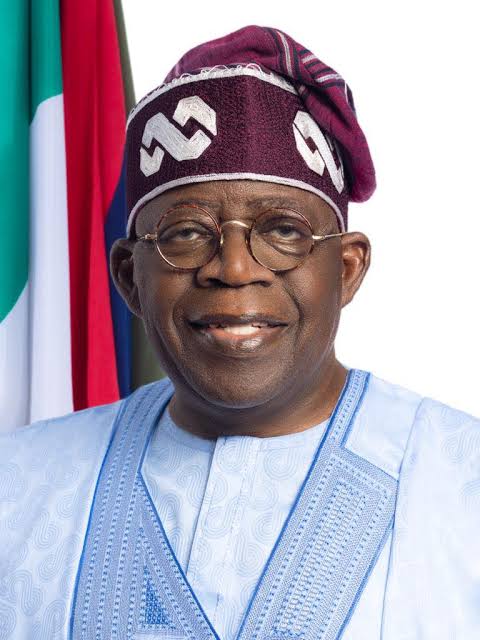
On the opposite facet of the equation, President Tinubu enters the mid-point of his administration with a mixture of structural benefits and rising political assessments. The consolidation of affect throughout a number of states and the strategic alignment of key political figures have strengthened the place of the ruling get together.
Nonetheless, political dominance on the structural stage doesn’t robotically translate into electoral invincibility. Public notion, {economic} realities, and governance outcomes will in the end form voter sentiment as the subsequent election cycle approaches. On this sense, the actual contest might not be about get together energy alone, however about efficiency and credibility.
The viability of the ADC as a real opposition power will largely rely on its means to beat the historic pitfalls of coalition politics in Nigeria. Questions round zoning, management hierarchy, and presidential ambition are more likely to outline its inner dynamics.
Can a number of high-profile figures agree on a single candidate? Will private ambitions be subordinated to collective technique? These are usually not trivial considerations. Nigeria’s political historical past is replete with alliances that faltered on the very second unity was most required. With out disciplined coordination and strategic compromise, the ADC might wrestle to translate momentum into significant electoral problem.
Waiting for 2027, two believable eventualities emerge. In a single, the ADC efficiently consolidates its ranks, harmonises competing pursuits, and presents a unified entrance able to mobilising nationwide assist. Such a growth would introduce a stage of electoral competitiveness that might considerably problem the ruling institution.
Within the different situation, inner divisions persist, resulting in fragmentation throughout the opposition. In that case, the ruling get together would seemingly profit from a divided area, making the trail to re-election significantly much less turbulent for the incumbent.
Past the speedy calculations of electoral victory and defeat, the present wave of defections raises extra profound questions concerning the state of Nigeria’s democracy. The rising tendency of politicians to maneuver throughout get together strains with minimal ideological justification factors to a system the place political survival typically takes priority over coverage consistency.
This pattern weakens the very basis of democratic accountability, as events turn into much less distinguishable by way of imaginative and prescient and governance philosophy; a democracy and not using a sturdy and coherent opposition dangers turning into procedurally useful however substantively hole.
Because the political panorama continues to evolve, the importance of the ADC experiment will lie not merely in its means to draw outstanding names, however in its capability to construct belief, coherence, and a compelling nationwide narrative.
The highway to 2027 is not going to be decided solely by defections or alignments, however by the power of political actors to current credible options that resonate with the aspirations of Nigerians. In the long run, the battle forward is not only about energy—it’s concerning the course of Nigeria’s democratic future.