
UN Common Meeting Declares Transatlantic Slave Commerce ‘Gravest Crime In opposition to Humanity,’ Calls For Reparations

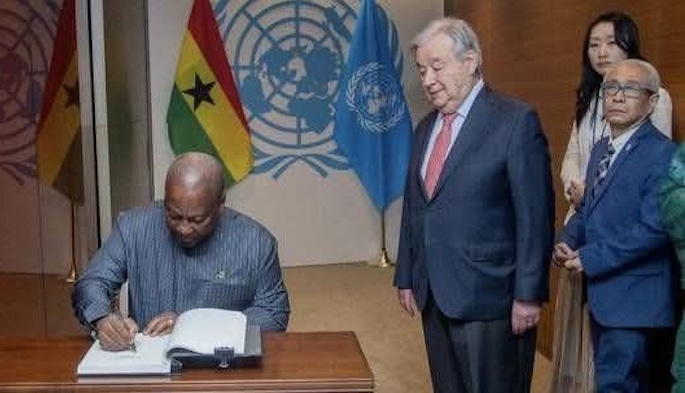
The United Nations Common Meeting has adopted a landmark decision declaring the transatlantic slave commerce as “the gravest crime in opposition to humanity” and calling for reparations as a step towards addressing centuries of injustice.
The decision, handed on Wednesday on the United Nations headquarters in New York, obtained overwhelming help with 123 international locations voting in favour. Nonetheless, america, Israel, and Argentina opposed the measure, whereas 52 nations—together with United Kingdom and several other European Union member states—abstained.
Launched by Ghana and backed by President John Mahama, the decision goes past symbolic recognition by urging international locations concerned within the slave commerce to interact in restorative justice efforts. It additionally requires the “immediate and unhindered restitution” of cultural artefacts—together with artworks, historic paperwork, and nationwide archives—to their international locations of origin for gratis.
Talking after the vote, Mahama described the decision as a big step in the direction of therapeutic historic wounds. “At present, we come collectively in solemn solidarity to affirm reality and pursue a path to therapeutic and reparative justice,” he mentioned, including that the measure would function a safeguard in opposition to forgetting the atrocities of the previous.
Though non-binding, the decision highlights the enduring legacy of slavery, linking it to ongoing racial discrimination and neo-colonial constructions in up to date society. Antonio Guterres condemned the transatlantic slave commerce as a criminal offense that “struck on the core of personhood, broke up households, and devastated communities,” noting that its proponents relied on racist ideologies to justify the system.
Samuel Okudzeto Ablakwa, Ghana’s Minister of Overseas Affairs, mentioned the vote sends a robust message that the worldwide neighborhood will now not tolerate impunity. He insisted that international locations chargeable for the slave commerce ought to formally apologise and decide to reparative measures for Africa and other people of African descent.
Nonetheless, the decision has drawn criticism from a number of Western nations. America described the textual content as “extremely problematic,” with its consultant arguing that it doesn’t recognise a authorized foundation for reparations for actions that weren’t unlawful below worldwide regulation on the time. Washington additionally objected to what it seen as an try to rank crimes in opposition to humanity.
Comparable considerations had been raised by European international locations. Sylvain Fournel of France warned that the decision dangers evaluating historic tragedies in a approach that would undermine the reminiscence of victims.
Regardless of the opposition, proponents of the decision argue that it marks an vital step in confronting the legacy of slavery. Between the sixteenth and nineteenth centuries, an estimated 12 to fifteen million Africans had been forcibly transported throughout the Atlantic, with greater than two million dying throughout the brutal journey.
For a lot of supporters, the decision represents not solely recognition of previous atrocities but additionally a renewed push for accountability, restitution, and long-overdue justice.
Melissa Enoch
Times Nigeria