

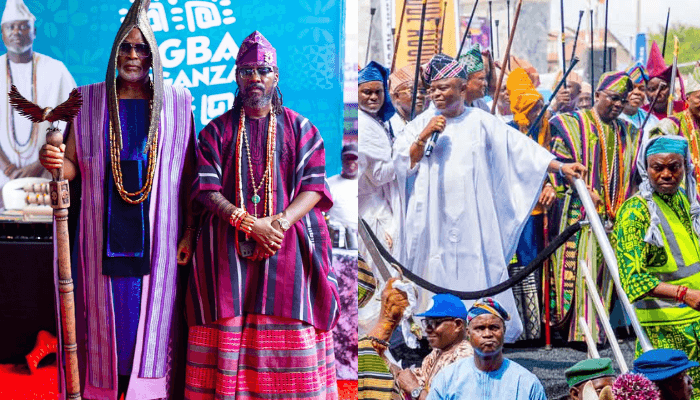
The town of Abeokuta got here alive with color, tradition, and celebration on Saturday because the Egba individuals marked the grand finale of the thirty ninth Lisabi Pageant, bringing to an finish a week-long occasion that started on March 23.
The annual pageant, held on the historic Ake Palace grounds in Abeokuta, Ogun State, drew Egba indigenes, dignitaries, and guests who gathered to honour Lisabi Agbongbo Akala, the legendary 18th century warrior recognized for main a revolt towards the Oyo Empire and securing independence for his individuals. The celebration featured homage I paying rites, reenactments, drumming, and vibrant dance performances that highlighted Egba heritage.
Organised below the authority of the Alake of Egbaland, the pageant introduced collectively all Egba subgroups, Ake, Oke-Ona, Gbagura, and Owu, in a symbolic present of unity, cultural satisfaction, and shared identification. The ambiance mirrored a deep reference to asto custom, strengthened by way of coordinated actions and neighborhood participation.
A serious spotlight of the grand finale was the Egbaliganza, a cultural style showcase championed by the Aare of Egbaland, Chief Lai Labode. The initiative positioned a highlight on conventional Egba apparel whereas selling native enterprise, with Abeokuta’s iconic Adire material dominating the shows.
The Lisabi Pageant Committee had earlier clarified in February that “Egbaliganza is proscribed to a two hour slot throughout the week-long programme and doesn’t alter the pageant’s core historic focus.”
Past the cultural festivities, the occasion additionally served as a homecoming for Egba indigenes within the diaspora, attracting political leaders, enterprise figures, and cultural influencers. The inflow of attendees contributed to elevated industrial exercise throughout town, with a noticeable rise in road commerce all through the week.
Safety presence was heightened throughout main venues to make sure a clean and peaceable celebration, because the pageant as soon as once more underscored its significance as a unifying cultural occasion rooted in historical past and identification.
Ademide Adebayo
Times Nigeria